I have spent more Saturdays than I can count standing in my parents' bathroom, looking at a tile floor that gets slick when my mother showers, trying to figure out which grab bar will actually hold her if her foot slips. My dad watches from the doorway. My mom apologizes for the mess, even though there isn't one. And I stand there with a tape measure and a stud finder, doing math in my head about anchor strength and lever arms, because I am the engineer son and this is what we do on Saturdays now.
The thing nobody tells you about being the adult child of aging parents is that you become a part-time procurement officer. You buy things. You return things. You read spec sheets late at night. You call Medicare and sit on hold for an hour and forty minutes to find out what's covered. And almost every "top 10 senior products" article you read along the way is useless — written by somebody who has clearly never measured a toilet bowl, never read an HCPCS code on a prescription, never watched their father lean on a walker that does not have a seat.
So this is the list I wish someone had handed me four years ago when this all started. Specific brands. Real 2026 prices. The Medicare codes you need to put on the prescription. And, for each one, the line nobody else writes — the "do not buy this if…" — because the wrong product is sometimes worse than no product at all.
Why most "top 10" lists are useless
Here is the test. Open any of those articles and look for three things: a brand name, a price, and a Medicare code. You will not find all three in the same sentence. You will find "mobility aids" as a category, with a stock photo of a smiling gray-haired model holding a generic walker. You will not find out whether the walker is the E0143 (which Medicare covers) or the E0130 (which your mother does not need). You will not find out that the lift chair Medicare reimburses for is only the lift mechanism, not the chair, and that your $1,800 chair gets you a check for about $300.
Granted, generic articles are easier to write. But they are useless to a caregiver standing in a Lowe's aisle on a Tuesday night trying to decide between two grab bars while his mother waits in the car.
A 90-second Medicare DME primer
Before the products, the rules. Medicare's Durable Medical Equipment benefit (DME) covers a specific kind of thing: equipment that is medically necessary, prescribed by a doctor, used in the home, expected to last at least three years, and primarily serves a medical purpose. That last phrase is where most caregivers get burned. Medicare reads it strictly. Bathroom safety equipment — grab bars, raised toilet seats, most shower chairs — is classified as a "convenience item" and is not covered. This is the single most common surprise. (See Medicare's DME page for the official language.)
When Medicare does cover something, the math is the 80/20 split: after the 2026 Part B deductible of $283, Medicare pays 80% of the approved amount and you pay the remaining 20%. The prescription has to include the correct HCPCS code, the doctor's NPI, and documentation of medical necessity. No prescription means no coverage, full stop.
The supplier matters as much as the prescription. Equipment must come from a Medicare-enrolled DMEPOS supplier, and ideally one that "accepts assignment," meaning they take Medicare's approved amount as payment in full. As of January 1, 2026, CMS moved DMEPOS accreditation surveys from every three years to every year, and there is a six-month moratorium on new supplier enrollment that started February 27, 2026 — which means fewer suppliers, slower turnaround. Plan for that. (Background on the 2026 DMEPOS changes.)
If you remember nothing else: Amazon cannot bill Medicare. Buying a rollator on Amazon means paying full retail for something Medicare would have covered most of.
The 12 products
1. Grab bars — Moen Home Care or Stander Security Pole
The single highest-ROI fall-prevention purchase you will ever make. The bathroom is the most dangerous room in the house for a fall — wet tile, hard surfaces, and often nothing safe to grab — and a properly anchored grab bar will hold 250+ pounds when a foot slips. The Moen 18-inch stainless bar runs $28–$42 at Lowe's or Home Depot. If there's no stud where you need a bar, the Stander Security Pole — a floor-to-ceiling tension pole — runs $199–$249 and works without drilling.
Original Medicare does not cover grab bars; they fail the "medically necessary" test. Some Medicare Advantage plans cover bathroom safety devices as a supplemental benefit, and many state Medicaid HCBS waivers will pay for installation. Check the Evidence of Coverage on the specific plan.
Don't buy if you are tempted by suction-cup grab bars. They fail. They are training wheels, not a safety device, and the false confidence they create is worse than no bar at all. Anchor into a stud or use a SecureMount-style toggle.
2. Shower chair or transfer bench — Drive Medical 12011KD-1 or Carex bench
A shower chair lets someone bathe sitting down, which sounds small until you realize it is the difference between a shower and a 911 call for anyone with balance problems, low blood pressure on standing, or post-surgical weakness. The Drive shower chair runs $35–$60. A Carex transfer bench — which lets you sit and slide across into the tub — runs $70–$120.
The HCPCS code is E0240 (bath/shower chair, with or without wheels). And here is the trap: Original Medicare typically does not cover E0240 because it falls under the bathroom-equipment exclusion. Medicare Advantage and some Medicaid waivers do.
Don't buy if the bathtub has glass doors that don't fully open, in which case a transfer bench will not fit. Measure the opening before ordering.
3. Raised toilet seat — Carex E-Z Lock or Drive Medical 12403
Lifts the seat three to five inches so getting up does not require quad strength most 75-year-olds simply do not have. Critical for hip and knee post-op recovery, and quietly transformative for anyone with arthritis. $35–$80 depending on height and whether it has arms.
The HCPCS code is E0244. Adjacent codes worth knowing: E0243 for a toilet rail, E0163 for a commode chair. Original Medicare generally does not cover any of them — same convenience-item exclusion — but Medicaid and Medicare Advantage often do.
Don't buy if you have not measured the toilet bowl. Round and elongated bowls are different shapes, and the wrong seat will rock.
4. Rollator with seat — Drive Nitro or Medline Empower
Four wheels, hand brakes, a built-in seat. The seat is the whole point. The moment your mother needs to rest mid-aisle at the grocery store and there is no seat, she will lean on the walker — which is not designed to be a chair — and that is how falls happen. A Drive Nitro Euro-Style runs about $200; the Medline Empower about $170. Range across the category is $130–$280.
The HCPCS code is E0143 (folding wheeled walker), or E0149 for the heavy-duty bariatric version. This one Medicare actually does cover. Part B reimburses E0143 at the standard 80/20 with a doctor's prescription, provided you order through a Medicare-enrolled supplier. For more on choosing the right device, here is our mobility aids deep dive.
Don't buy if the user has significant cognitive impairment and is likely to forget to lock the brakes. A standard walker (E0130) without wheels is safer in that case, even though it is less convenient.
5. Lift recliner — Pride Mobility VivaLift! or Golden Technologies PR-505
A lift recliner tilts the seat forward and lifts the user up toward standing. For someone with severe arthritis, Parkinson's, or post-stroke weakness in the legs and hips, it is the difference between independence and "stuck in the chair until somebody helps." Range is $1,000–$2,400 depending on size, dual-motor versus single, and whether you want heat and massage.
Here is the part nobody explains until after you've bought one. The HCPCS code is E0627 — but Medicare only covers the lift mechanism, not the chair. The chair fabric, frame, and recline motor are coded A9270 and are explicitly not covered. Reimbursement on the mechanism is roughly $300. So if you spend $1,800 on a lift recliner expecting Medicare to pay 80%, what you will actually get is a check for around $240 (80% of the ~$300 mechanism allowance). Plan for the real out-of-pocket. (CMS policy article A52518 is the source.)
Don't buy if the user can already stand up from a regular recliner with effort — Medicare will deny the claim, and the chair becomes a luxury, not a medical device. Also worth noting: in a power outage, a non-battery-backup lift chair will leave the user reclined and stuck. Battery backup is an extra option and worth it if your parent lives alone.
6. Automatic pill dispenser — Hero Health or MedMinder
The use case here is not "Mom forgets her pills." The real problem is that Mom forgets, takes a dose three hours late, then takes the next dose on time — and now she has doubled up on a blood thinner. A locking, scheduled dispenser prevents that.
Hero Health is the category leader: $29.99/month on a 12-month prepaid plan (or $44.99/month billed monthly, $59.99 month-to-month), no hardware fee, dispenser arrives on loan. It holds 90 days of up to 10 medications and the smartphone app shows adherence to family from anywhere. MedMinder runs about $125/month but includes a pharmacy pre-fill service. (SeniorList comparison.)
Original Medicare does not cover these. Some Medicare Advantage plans reimburse via an OTC or wellness allowance — typically $25–$200 per quarter. They are HSA/FSA eligible.
Don't buy if the medication regimen includes anything liquid, refrigerated (insulin), or true PRN (nitroglycerin, rescue inhaler). Also skip it if memory loss is severe enough that the user will not recognize the dispenser as "the pill thing." At that point a caregiver pre-filling a weekly organizer is more reliable, and cheaper.
7. Personal Emergency Response System — Lively Mobile2 or Bay Alarm Medical
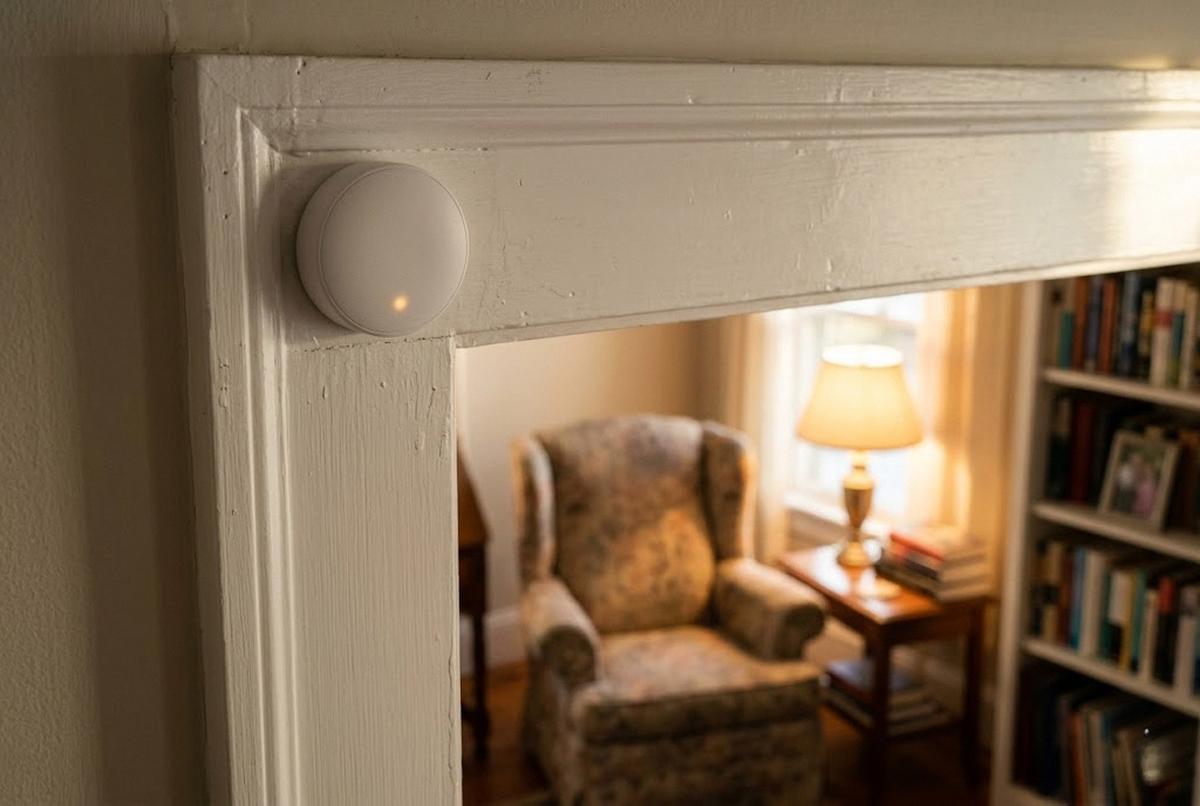
Press a button, talk to a 24/7 monitoring center, dispatch EMS or family. The mobile units use cellular and GPS, so they work outside the house — at the grocery store, in the garden, on a walk.
Lively Mobile2 is $49.99 for the device, $24.99/month basic, $34.99/month for the Premium plan that includes an on-call nurse line, plus $9.99/month for fall detection. Bay Alarm Medical starts at $27.95/month for in-home and around $35/month for mobile, fall detection adds about $10/month.
Original Medicare does not cover PERS. Many Medicare Advantage plans include a free or discounted PERS as a supplemental benefit — Aetna, Humana, and Kaiser all have versions worth checking. Some Medicaid HCBS waivers cover PERS for homebound seniors.
Don't buy if the user refuses to wear the pendant. The most expensive PERS is the one sitting on the dresser. For that user, the next item is sometimes the only thing that actually gets worn.
8. Apple Watch SE for fall detection
The Apple Watch SE (3rd gen) is $249 for the 40mm GPS or $279 for the 44mm. Cellular adds $50–$80 plus about $10/month on a carrier line. Critically, there is no monthly monitoring fee for fall detection itself — the watch dials 911 and notifies emergency contacts on its own.
Any Apple Watch Series 4 or later, including the SE, has hard-fall detection: if it detects a hard fall and the user does not respond within 60 seconds, it dials emergency services and shares GPS coordinates with designated contacts. It also has crash detection and heart-rate alerts. It is not covered by Medicare. HSA/FSA eligible if prescribed; some Medicare Advantage wellness allowances will reimburse it.
Don't buy if the user will not charge it nightly, has tremors that trigger false-positive falls, or cannot read the screen without prescription glasses. The SE also lacks ECG and blood-oxygen — if those features matter, step up to a Series 11. For the broader picture on staying upright, our falls prevention exercises piece is the companion read.
9. Continuous glucose monitor — Dexcom G7 or Abbott Freestyle Libre 3
Real-time glucose readings every five minutes, no finger sticks. For an insulin-dependent diabetic — or honestly even a Type 2 patient struggling with A1C — it changes diet behavior in a way no paper logbook ever has. You see the spike from the rice and you adjust.
Cash retail runs about $500/month for sensors. With Medicare, out-of-pocket is closer to $50–$100/month after the Part B 20% coinsurance. GoodRx cash price goes as low as $174 for a 15-day G7. The relevant HCPCS codes are K0554 (receiver), K0553 (sensor/transmitter supply allowance), and the legacy A9276/A9277 for older systems.
Medicare Part B covers CGMs for insulin-dependent diabetics and some non-insulin Type 2 patients with documented hypoglycemia. Critical 2026 catch: Medicare requires the user to have and use the dedicated receiver, or have proof of receiver use on file — phone-only use violates the coverage rules and the claim will get denied.
Don't buy if the user is a non-insulin Type 2 diabetic with stable A1C. Medicare will deny, and cash price is brutal — about $6,000 a year.
10. Smart blood pressure cuff — Omron Platinum BP5450
Clinically validated upper-arm cuff that passes ISO 81060-2:2018 — most wrist cuffs do not. $80–$110. Bluetooth syncs to the Omron Connect app, which can email a 30-day trend log to the cardiologist before the appointment. AFib indicator on the device.
Original Medicare covers home BP monitors only for dialysis patients or for hypertension diagnosed via ambulatory BP monitoring (HCPCS A4670 / E0610). For everyone else: out-of-pocket or HSA/FSA. Some Medicare Advantage plans reimburse via OTC allowance.
Don't buy if the user has an arrhythmia severe enough that single readings vary by 30+ mmHg — they need clinical monitoring, not a home device. And avoid wrist cuffs entirely. They are 10–15% less accurate, and a blood pressure number you cannot trust is worse than no number at all.
11. OTC hearing aids — Jabra Enhance Select 500
The FDA created the over-the-counter hearing aid category in 2022, and the market has matured fast. For mild-to-moderate hearing loss, you no longer need to spend $4,000–$6,000 through an audiologist channel. The Jabra Enhance Select 500 runs about $1,695/pair and includes a 100-day trial, a 3-year warranty, and remote audiology support — that last part is what makes it worth the premium over a bare-bones self-fit aid. (Sony sold a well-reviewed self-fit option, the CRE-C20, at $999, but in 2026 it announced it is winding down its OTC hearing-aid line — so factor in limited future support if you spot one on closeout.)
Original Medicare does not cover hearing aids — that is a statutory exclusion baked into the 1965 law. Many Medicare Advantage plans include a hearing benefit ($500–$2,500 every 2–3 years through TruHearing or NationsHearing networks). Some Medicaid programs cover for specific eligibility tiers. For the longer treatment of this category, see our OTC hearing aids guide.
Don't buy if the hearing loss is severe, asymmetric (one ear much worse than the other), or sudden. Those need an audiologist and possibly a medical workup, not OTC.
12. Senior tablet or phone — GrandPad, Jitterbug Smart4, or RAZ Memory Phone
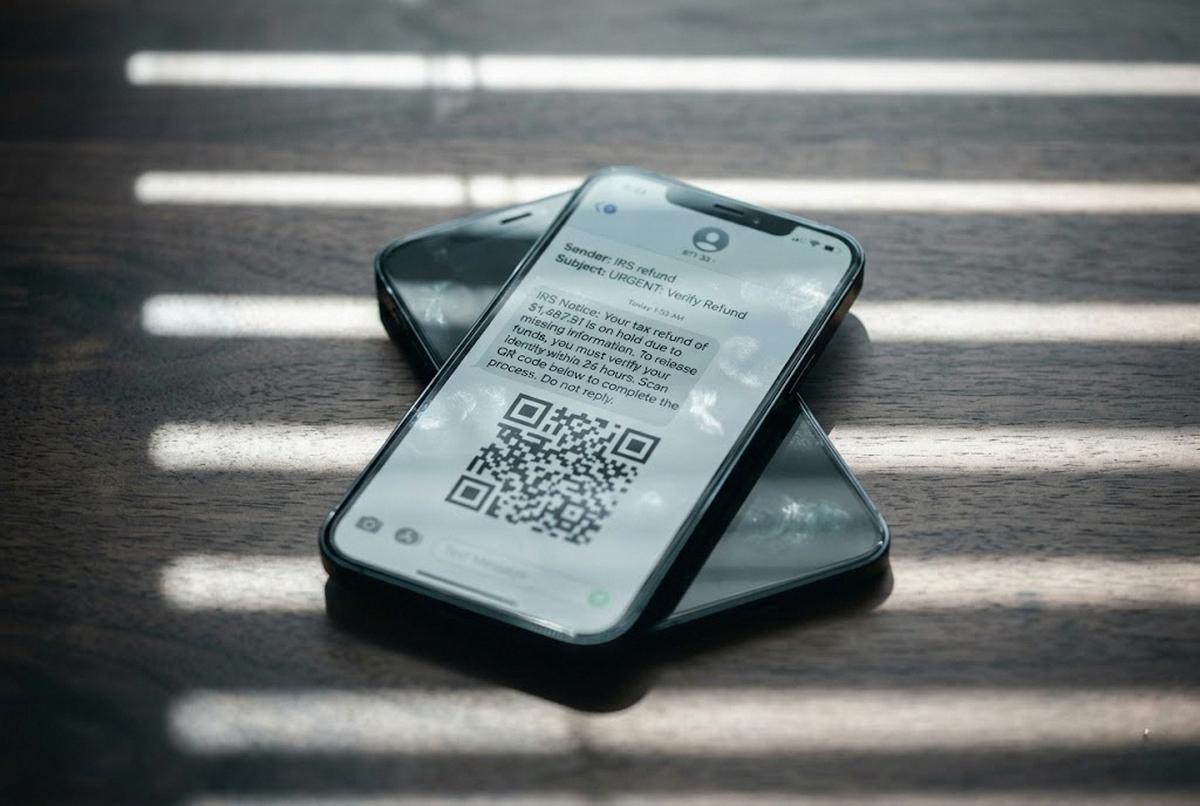
The right device depends entirely on where the user is on the cognitive curve. GrandPad is $299 plus about $25/month (billed annually), walled-garden by design — no app store, no way to download a fake-Norton scam app, no way to click a phishing link, and video calls connect with one tap. (For more on the scam side of that equation, our Medicare scam piece is the companion read.) The Jitterbug Smart4 is $119.99 plus a Lively plan from $14.99/month — it is a real Android phone with a simplified interface for users who still want flexibility. The RAZ Memory Phone is $369, single-screen, locked-down, designed for dementia: press a picture of the grandson, talk to the grandson.
None of these are covered as DME. Some Medicare Advantage plans reimburse via OTC allowance.
Don't buy if the user is already comfortable with an iPhone or iPad. GrandPad's "simpler" interface will feel infantilizing and the device will end up in a drawer. Match the device to the user's actual current ability, not the family's anxiety.
What I'd tell you if you were buying this for your own parent
These are the mistakes I have watched real families make, including my own. None of them are theoretical.
- Buying DME on Amazon instead of through a Medicare-accredited supplier. Amazon is fine for grab bars and shower chairs, because Medicare doesn't cover those anyway. It is not fine for the rollator, the lift mechanism, or the CGM. Amazon cannot bill Medicare. Buying there means paying 100% out of pocket for something Medicare would have covered most of.
- Getting a walker without a seat. Standard walkers (E0130) are cheaper. The moment your mother needs to rest mid-aisle and there is no seat, she will lean on a walker that is not built to be a chair, and that is how falls happen. Get the rollator, E0143. Always.
- Buying a refurbished CPAP from a third-party reseller. The 2021–2024 Philips DreamStation recall flooded the secondary market with "refurbished" units, some with reprogrammed serial numbers and the wrong therapy modes. Buy CPAP only through an accredited DME supplier with a current prescription.
- Buying suction-cup grab bars. I will keep saying this. They detach. The false sense of security is worse than no grab bar.
- Buying a wrist blood pressure cuff. Marketed as "convenient." 10–15% less accurate. Fails ISO validation. Get the upper-arm cuff or don't bother.
- Buying a "senior tablet" before checking whether the senior already has and likes an iPad. Don't downgrade somebody who is already comfortable. The most expensive device is the one shoved in a drawer because it feels condescending.
- Skipping the prescription step on Medicare-eligible items because "it feels like a hassle." The hassle is fifteen minutes at a doctor's appointment. Skipping it is paying 100% for something that should have cost 20%.
- Buying a lift chair without reading the Medicare reimbursement detail. Medicare covers the lift mechanism (~$300), not the chair. Families budget $1,500 expecting full reimbursement and get a $300 check. Plan for the actual out-of-pocket.
The order I'd buy them in
If I were starting from zero today, helping a parent who is mostly independent but starting to slow down, I would buy in this order. Not because the early items are more important than the later ones, but because they are the foundation other purchases sit on top of.
First, grab bars and a shower chair. Bathroom is where falls happen. These are cheap, they are not Medicare-covered anyway so there is no paperwork, and they pay back the moment a foot slips. Second, the rollator, with the prescription, through an accredited supplier. Get the 80% off. Third, a PERS or an Apple Watch with fall detection — whichever the user will actually wear. The fourth purchase is the pill dispenser, but only if the regimen and the cognitive baseline support it. After that, the rest depend on the specific situation: lift recliner if there is severe leg or hip weakness, CGM if there is insulin-dependent diabetes, OTC hearing aids if there's been a hearing test confirming mild-to-moderate loss, BP cuff if a cardiologist is asking for trend data. The senior phone is last and only if the family communication path is broken.
If you want a broader frame on this kind of staged thinking, our practical caregiving guide covers the rest of the picture.
A note from the bathroom
So that is the list. I am back at my parents' house this Saturday. The grab bar is in. The rollator is downstairs by the back door. The pill dispenser sits on the kitchen counter and beeps at 8 a.m. and 8 p.m., and my mother answers it like an old friend. None of these things are dramatic. None of them are the products that get featured on TV. They are the boring, specific, brand-name, code-on-the-prescription tools that quietly let my parents keep living the life they have built.
I am not the master of any of this — I am still learning, still calling Medicare, still standing in the bathroom with a tape measure. But this is the page I wish I had four years ago. If it saves one Saturday for one other family, that is enough.