I was standing in the produce aisle at the Ingles on Tunnel Road last month when I noticed a couple a few feet away. She was saying something to him about the tomatoes. He was nodding. She said it again, louder. He nodded again. Then she put her hand on his arm and turned his face toward hers and repeated it a third time, slowly, with the kind of controlled patience that costs something. He finally answered. She looked at the ceiling for half a second, the way you do when you're choosing between frustration and grace, and they moved on.
The weight of what I'd just watched held me there for a moment. Not because it was dramatic. Because it was ordinary. I've seen that scene play out in living rooms, at church potlucks, in the hallways of the wellness center where I've worked for twenty-five years. One person speaking. Another person pretending to hear. The distance growing so gradually that neither one notices until the silence has a shape.
One in three adults over sixty-five has hearing loss. By seventy-five, nearly half. The average person waits seven years between noticing a problem and doing anything about it. Seven years of turning up the television until the neighbors can follow the plot. Seven years of quietly withdrawing from the conversations, the dinners, the phone calls that once held a life together.
The Kind of Hearing Loss That Sneaks In
Not all hearing loss is the same, and knowing which kind you're dealing with changes everything about what to do next.
Sensorineural hearing loss is the most common type in adults over sixty. It happens when the tiny hair cells in the inner ear, or the auditory nerve itself, are damaged. Age, noise exposure over a lifetime, genetics, certain medications. The damage is permanent. Those hair cells don't grow back. What you lose, you lose.
High-frequency sounds go first. Consonants like "s," "f," "th," and "sh" disappear before vowels do. So you hear someone talking but can't make out the words. The volume is there. The clarity isn't. A woman in one of my Seasons of Grace circles put it perfectly: "It's like everyone started mumbling at the same time and nobody told me."
Conductive hearing loss involves the outer or middle ear. Earwax buildup, fluid behind the eardrum, otosclerosis. The good news: it's often treatable. Sometimes surgically. Sometimes with a procedure as simple as having a doctor remove impacted wax. People walk out of an ENT office hearing clearly for the first time in months, looking slightly stunned, because the problem was wax. Wax!
Mixed hearing loss combines both types. More common than people think after sixty.
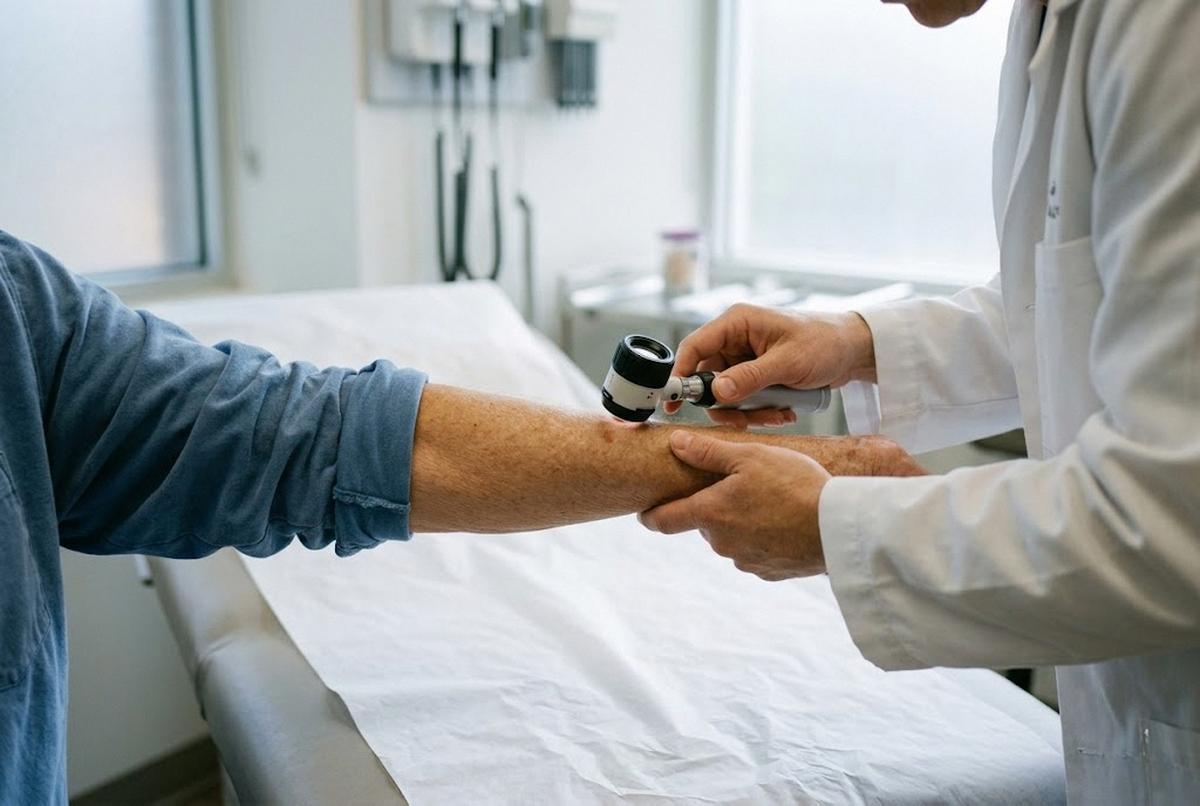
Before you spend a dollar on any hearing aid, get a proper evaluation. An audiologist can tell you exactly what kind of loss you have, how severe it is, and whether any part of it is medically treatable. Skip this step and you're guessing.
The Signs Nobody Wants to Admit
Leroy came to our Tuesday circle about eighteen months ago. Retired letter carrier, seventy-one, broad shoulders, the kind of handshake that makes you pay attention. His wife had died the year before, and his daughter thought the group might help. He sat in the back row for the first three sessions and said almost nothing.
My assumption was that he was grieving quietly. He was. But he was also struggling to follow the conversation. The community room at Seasons of Grace has high ceilings and hard floors. Sound bounces. Background noise from the coffee urn and people shuffling chairs made it worse. Leroy couldn't distinguish individual voices from the ambient noise, and rather than ask people to repeat themselves in a room full of strangers, he just stopped trying.
His daughter told me later he'd been doing the same thing at home. Skipping phone calls. Turning down dinner invitations. Watching television with closed captions and the sound off. Not because he preferred silence. Because silence was easier than the embarrassment of not keeping up.
The signs are worth naming:
- Asking people to repeat themselves more than occasionally
- Turning the TV volume higher than others prefer
- Difficulty following conversations in noisy settings
- Avoiding phone calls
- Responding with answers that don't quite match the question
- Withdrawing from social situations that used to feel comfortable
- Ringing or buzzing in the ears (tinnitus)
- Fatigue after conversations
That last one surprises people. Listening fatigue is real. When your brain works overtime to fill in gaps, assembling meaning from fragments, it burns through cognitive resources at a rate that leaves you drained by dinnertime. A 2023 study in Frontiers in Neuroscience confirmed it: adults with untreated hearing loss show higher mental fatigue and reduced cognitive performance compared to peers with treated or normal hearing.
If you recognize yourself in any of this, you're not "just getting old." You're dealing with a medical condition that has solutions, and pushing back when a doctor calls it "just aging" applies here too.
OTC Hearing Aids: What Changed in 2022
On October 17, 2022, over-the-counter hearing aids became legal in the United States for the first time. The FDA finalized a rule creating a new category of hearing devices that adults eighteen and older could buy without a prescription, without a medical exam, and without an audiologist fitting.
This was a big deal. Not a small regulatory tweak. A fundamental shift in who gets to access hearing help and at what price.
Before 2022, the only path to a hearing aid was through a licensed audiologist or hearing instrument specialist. The device itself might cost $2,000 to $4,000. Per ear. Add the fitting and follow-ups, and you were looking at $4,000 to $8,000 for a pair. Insurance rarely covered it. Medicare didn't cover it. Millions of people who needed hearing aids simply went without.
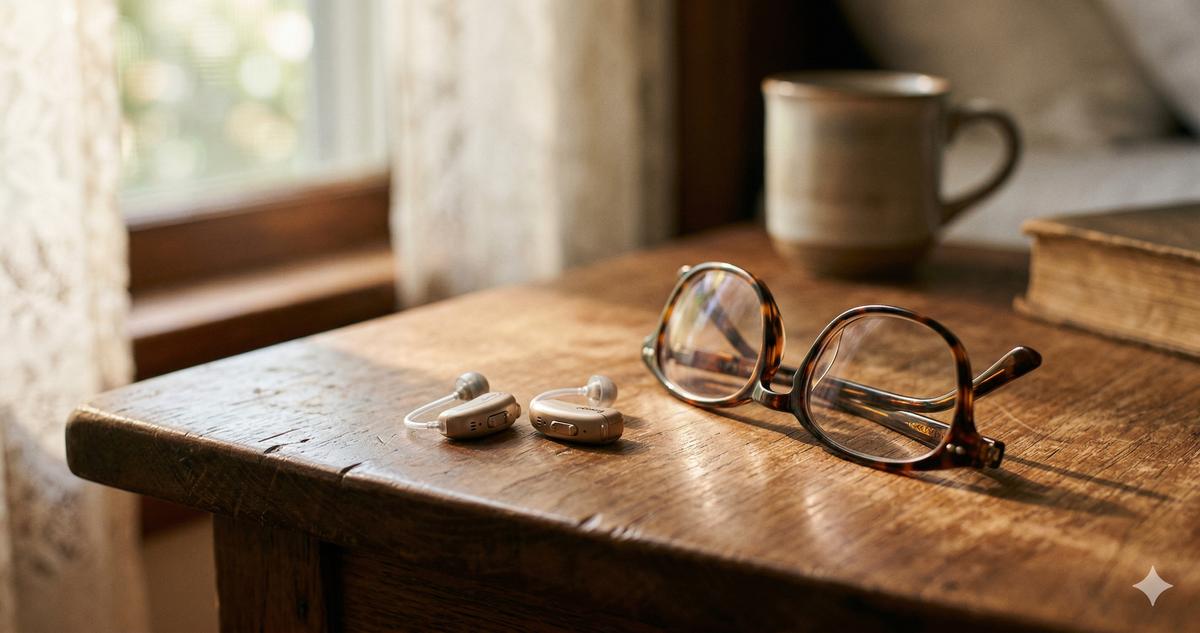
OTC hearing aids are designed for perceived mild to moderate loss. Self-fitting through a smartphone app. Roughly $200 to $1,500 a pair. But cheaper doesn't automatically mean right for you, and the marketing sometimes makes it sound like the problem is solved. It isn't. Not entirely.
The rules kept moving after that. In September 2024, the FDA went a step further and authorized the first over-the-counter hearing aid software — Apple's Hearing Aid Feature for the AirPods Pro 2. For the first time, earbuds that millions of people already owned could become a clinically authorized hearing aid with a free update. That quietly changed the math for a lot of families, and I'll come back to it below, because it's now the cheapest legitimate way to find out whether OTC help is worth pursuing at all.
OTC vs. Prescription: When Each Makes Sense
Prescription hearing aids, fitted by an audiologist, remain the better choice for moderate to severe loss. The audiologist maps your hearing profile across frequencies, programs the device precisely, and adjusts it over months as your brain adapts. A device that doesn't sit right in your ear canal will whistle, slip, or just feel wrong enough that you leave it in a drawer.
OTC aids work for mild to moderate loss. Struggling in noisy restaurants but fine in quiet conversation? OTC is worth trying. Can't hear your granddaughter three feet away in a quiet room? You probably need professional fitting.
My recommendation: start with an audiologist visit regardless. Get a baseline audiogram. Then decide with data instead of guesswork.
One practical note. Most OTC manufacturers offer 30- to 45-day trial periods. If the device doesn't work, send it back. Don't let a $600 purchase sit in your nightstand because returning it felt like too much trouble.
Four OTC Options Worth Knowing About
These come up most often in my conversations at Seasons of Grace and in consumer research. I've put the one most people already have access to first.
Apple AirPods Pro 2 (or Pro 3) — About $249 a pair, and here's the part that surprises people: if you or a family member already own a recent pair, the hearing aid function is free. In September 2024 the FDA authorized Apple's Hearing Aid Feature as the first over-the-counter hearing aid software, cleared for adults eighteen and older with perceived mild to moderate loss. You update the AirPods, take a five-minute hearing test in the iPhone's Health app (it's a real pure-tone test, the same kind an audiologist uses), and the earbuds calibrate themselves to your results. The catch is the ecosystem: it requires an iPhone or iPad running iOS 18 or later, the battery lasts only a few hours of continuous use, and they look like earbuds, not medical devices — fine for dinner with the family, less ideal for all-day wear. But as a near-zero-cost way to find out whether amplification helps you before spending $800 on a dedicated device, nothing else comes close. I now suggest people start here.
Jabra Enhance Plus — Around $799 a pair. They look like wireless earbuds, which matters to people who don't want something visibly medical. Bluetooth connectivity, so they double as earbuds for calls and music. Consumer Reports rated them among the top OTC options in 2025. Some people with smaller ear canals report discomfort after a few hours.
Sony CRE-E10 — About $999 a pair. Developed with WS Audiology, one of the largest hearing aid manufacturers in the world. Nearly invisible, sitting deep in the ear canal. Excellent sound quality for mild to moderate loss. The trade-off: battery life runs roughly 20-23 hours per charge, and the deep-canal fit isn't for everyone.
Lexie B2 Powered by Bose — Roughly $899 a pair. Bose licensed its audio technology to Lexie Hearing, backed by the Bose audio engineering team. The app walks you through self-fitting in about fifteen minutes. Opal, a retired school secretary in our Seasons of Grace group, tried these after her daughter bought them as a birthday gift. She told me they weren't perfect — "wind noise drives me up a wall" — but for conversation in normal rooms, they changed her daily life.
All of these require a smartphone for setup, and the AirPods specifically require an iPhone or iPad. If you don't use one, you'll need help from family for the initial configuration, or you may be better served by a prescription device fitted in person.
What Medicare Does and Doesn't Cover
Medicare does not cover hearing aids. Not OTC. Not prescription. Not the device, not the fitting, not the batteries. This has been true since 1965, and despite bipartisan efforts in Congress, it hasn't changed as of 2026.
What Medicare Part B does cover:
- Diagnostic audiologist visits. If your doctor orders a hearing evaluation because they suspect a medical condition causing your hearing loss, Medicare Part B pays 80% after your $283 annual deductible (2026). You need a referral from your physician for the evaluation to be covered. Not the same as a "hearing test at Costco." A medical diagnostic evaluation, ordered by a doctor.
- Cochlear implants. For severe to profound hearing loss that doesn't respond to hearing aids, Medicare covers cochlear implant surgery and the external sound processor. (Curious whether Medicare covers other services or devices? Our Medicare coverage checker lets you look it up in plain English without calling 1-800-MEDICARE.) A different conversation entirely, but if your loss is that severe, ask your audiologist whether you're a candidate.
- Bone-anchored hearing systems (BAHA). Covered when medically necessary for specific types of conductive or mixed hearing loss.
Some Medicare Advantage plans have started offering hearing aid benefits. UnitedHealthcare, Humana, and Aetna all have Advantage plans that include $500 to $2,500 in annual hearing aid allowances, depending on the plan. If you're shopping for a Medicare Advantage plan, hearing coverage is worth checking. Read the fine print. Some plans cover OTC devices, some only cover specific brands, some require using a partner retailer like Amplifon or HearUSA.
But Original Medicare? Nothing for hearing aids. Not a penny. It remains one of the most significant gaps in senior healthcare coverage.
The VA Hearing Aid Program: Free for Veterans
If you're a veteran enrolled in VA healthcare, stop reading this section and call your VA audiologist. I'm not being flippant. The VA provides hearing aids at no cost to eligible veterans, and their program is one of the best-kept secrets in federal benefits.
The VA is the largest purchaser of hearing aids in the country. They buy in volume, offering top-tier devices (Phonak, Oticon, ReSound) that would cost $3,000 to $6,000 a pair on the civilian market. Batteries, repairs, replacements, follow-up fittings. All covered. No copay.
You need to be enrolled in VA healthcare. Priority groups 1-7 have the broadest access. Service-connected hearing loss gets automatic coverage. But even veterans without a service-connected rating can often receive hearing aids if hearing loss affects daily function. Contact your nearest VA Medical Center audiology clinic or call 1-800-827-1000.
Three veterans in our community circles waited years because they assumed their loss "wasn't bad enough" or "wasn't from service." All three walked out with high-quality devices at zero cost. The threshold is lower than most veterans think!
The Connection Nobody Talks About Enough
Here is the part of this article I care about most, and it has nothing to do with devices or coverage.
Hearing loss isolates people. Slowly. Methodically. In a way that looks, from the outside, like a personality change. A man who used to be the loudest voice at the dinner table goes quiet. A woman stops attending her book club. The loneliness that follows retirement deepens further when you can't hear the people trying to reach you. A couple begins eating in silence not because they've run out of things to say but because saying them has become too exhausting.
The research is unambiguous. A 2020 study in JAMA Otolaryngology found adults with hearing loss were 28% more likely to experience social isolation compared to those with normal hearing. The Lancet Commission on dementia prevention identified untreated hearing loss as the single largest modifiable risk factor for dementia in midlife, accounting for roughly 7% of all dementia cases worldwide. A Johns Hopkins longitudinal study found older adults with mild hearing loss were twice as likely to develop dementia over twelve years; those with severe loss, five times as likely.
These aren't scare numbers. They're the documented cost of leaving a treatable condition untreated.
Lenora, a retired nurse who came through Seasons of Grace back in 2018, told me something I wrote down that evening and have carried since. She said, "I didn't lose my hearing all at once. I lost my friends all at once." She'd spent three years withdrawing from gatherings, declining invitations, letting phone calls go to voicemail, before her sister finally sat her down and said enough. Lenora got fitted for prescription hearing aids at seventy-three. Within six months, she was back at her church choir. Not because the aids were perfect. Because she could participate again.
The opposite of hearing loss isn't perfect hearing. It's connection. And every month someone waits is a month of connection they don't get back.
How to Talk to a Parent About Hearing Loss
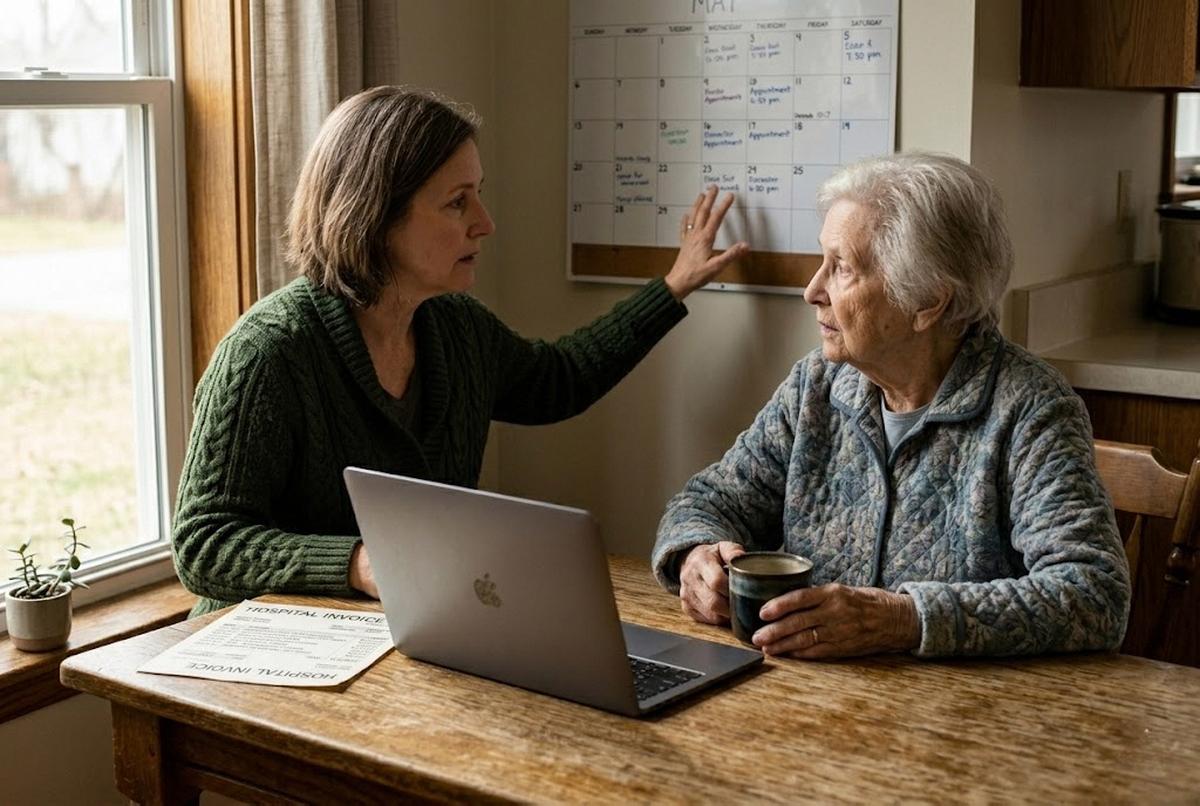
If you've read this far because you're worried about someone you love, this section is for you.
Don't start with the hearing aids. Start with what you've noticed.
"Dad, I've noticed you've been quieter at Sunday dinners. You used to have an opinion about everything. I miss that."
"Mom, last Tuesday on the phone you asked me to repeat myself six times. That's not like you."
"I'm not saying anything is wrong. I'm saying I noticed, and I want to understand."
What doesn't work: "You need hearing aids." Four words, and every one of them lands wrong. "You" puts them on the defensive. "Need" implies weakness. "Hearing aids" conjures images of bulky beige devices from 1987 and the admission that something is broken.
Approach it the way you'd approach any conversation about helping a parent who doesn't want help. Lead with observation, not prescription. Offer to go with them to the appointment. Make it about connection, not correction.
And be patient. Remember those seven years I mentioned at the beginning? The gap between noticing and acting? Part of that gap is denial, yes. But part of it is grief. Admitting you can't hear well anymore means admitting something about your body has changed in a way you can't undo. Give people room to arrive at that realization on their own schedule. You can hold the door open without pushing them through it.
One Conversation, This Week
My mother, in the years before Alzheimer's took her language, had a way of cupping her hand behind her ear during Sunday services at First African Baptist in Savannah. She'd lean forward in the pew, hand curled behind her right ear, straining to catch the sermon. My father would lean toward her and repeat the pastor's words in a low murmur, his mouth close to her good ear. They did this for years. It looked like intimacy. It was intimacy, I suppose. But it was also two people building their Sunday morning around a problem neither of them named.
She never got hearing aids. Nobody suggested it. It was the 1980s in Savannah, and her generation didn't talk about those things the way we can now. I think about what she missed. Not the sermons specifically. The conversations after. The fellowship hall chatter over fried chicken and pound cake. The jokes between the choir members she loved. She was there, physically, every Sunday. But she was hearing less and less of the life happening around her.
If you're reading this and something in your chest tightened a little, pay attention to that. It might be recognition.
Call an audiologist this week. Not for a hearing aid. For a conversation. For a baseline. For the information that turns a vague worry into something you can act on. Most offices will schedule a hearing evaluation within a week or two. If cost is a concern, call your local Area Agency on Aging at 1-800-677-1116 and ask about free or low-cost hearing screening events in your area. Many Lions Clubs sponsor them. So do some Costco and Sam's Club hearing centers, though those screenings are basic.
And if it's not your ears but someone else's, have the conversation. Not the one about hearing aids. The one about what you've noticed. The one that starts with "I miss hearing your voice in the room."
My mother couldn't hear the choir by the end. But she could still sing every hymn from memory, the same way she did when I was small, her voice finding the melody by feel. I think she kept singing because the music lived inside her body, not in the air. Some things stay even when the hearing goes.
But the things that don't stay — the ordinary words, the daily exchanges, the sound of someone you love saying your name from the next room — those are worth fighting for. Every single one.