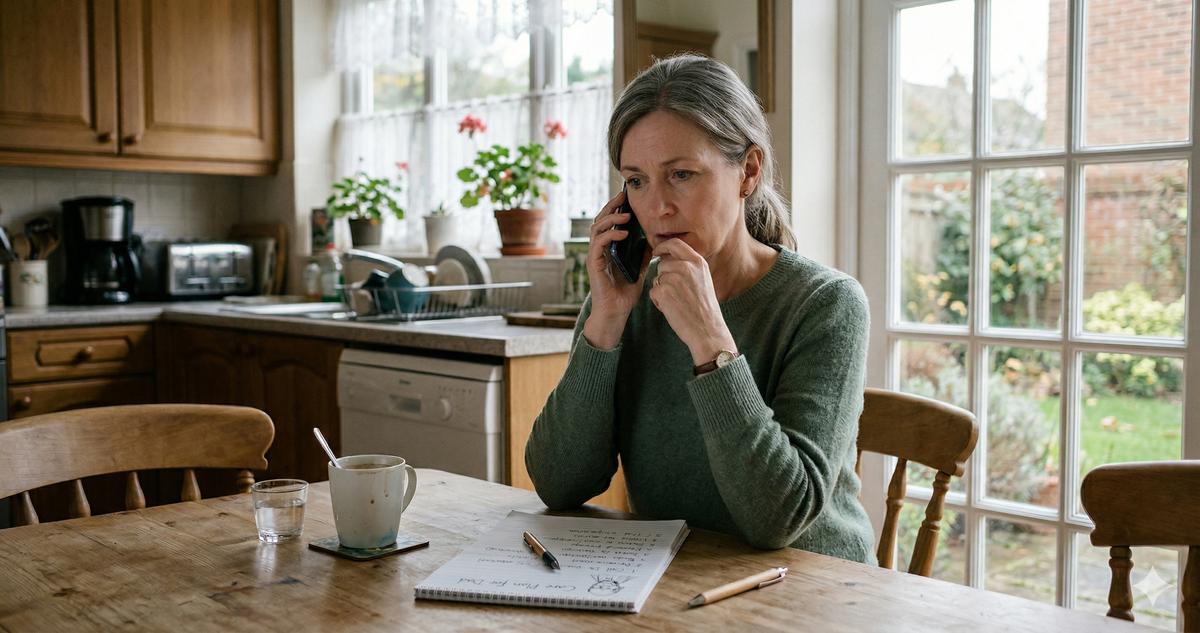
My dad had been in assisted living for about six months when my mom called on a Wednesday evening. Not our usual Sunday check-in. Wednesday. The detail alone made my stomach flip.
"Anak, I think something's wrong with the water heater."
No hot water. She'd been taking cold showers for two days before she told me. Two days. I live close enough to drive over, so I was there Thursday morning with a plumber's number and a growing sense of dread about what happens to families who don't live close enough. Because nobody talks about this: most caregiving content assumes you're nearby. Within driving distance. Able to drop by on a Saturday, check the fridge, change a lightbulb, sit at the kitchen counter and just look at your parent to see if something's off.
But according to the National Alliance for Caregiving and AARP, roughly 11% of family caregivers in the United States live an hour or more from the person they're caring for. Roughly 5 million people managing medications, coordinating doctor visits, and worrying about falls from hundreds or thousands of miles away. And the Caregiver Action Network puts the average distance at 450 miles. Four hundred fifty miles between you and the person you love most, with nothing but a phone screen and a prayer.
SeniorMediaHub exists partly because of this gap. Not the geographic gap. The information gap. When I searched for long-distance caregiving resources, vague reassurance and not much else turned up. So I wrote the guide I'd want if my mom lived in Cebu instead of twenty minutes away. Every tool, every strategy, every hard conversation, written by someone who's been in the caregiving trenches who knows the system fights you at every turn.
Building Your Remote Monitoring Setup
The technology for keeping tabs on a parent from far away has gotten genuinely good in the last few years. Not perfect. But good enough to catch problems before they become emergencies, which is the whole point.
Start with the basics. A smart doorbell camera like the Ring Video Doorbell ($99) or Google Nest Doorbell ($179) lets you see who's coming and going. When my Tita Edith's daughter moved to California, the first thing she did was install a Ring at the front door. Not to spy on her mom. To confirm the home health aide showed up at 9 AM like she's supposed to. To see the neighbor brought food on Tuesday. To notice nobody came by for three straight days, which happened once, prompting a phone call uncovering a mild UTI Tita Edith had been hiding.
Indoor cameras are trickier. Some parents feel watched. My mom would rip a camera off the wall and hand it back to me with a look capable of melting steel. But for parents comfortable with it, the Wyze Cam v4 ($35) or Blink Mini 2 ($29) are affordable, letting you check in visually. Put one in the kitchen, not the bedroom. Respect matters here.
Medication management is where things get critical. The MedaCube automatic pill dispenser ($89.99/month subscription) sorts, stores, and dispenses medications on schedule. Missed dose? You get an alert. MedMinder ($39-$74/month) does something similar with a lockable tray. For a simpler option, the TabSafe Automatic Pill Dispenser runs about $80/month. Every one of these costs real money, and I won't pretend otherwise. But compare that to a hospitalization from missed blood pressure medication, and the math starts making sense.
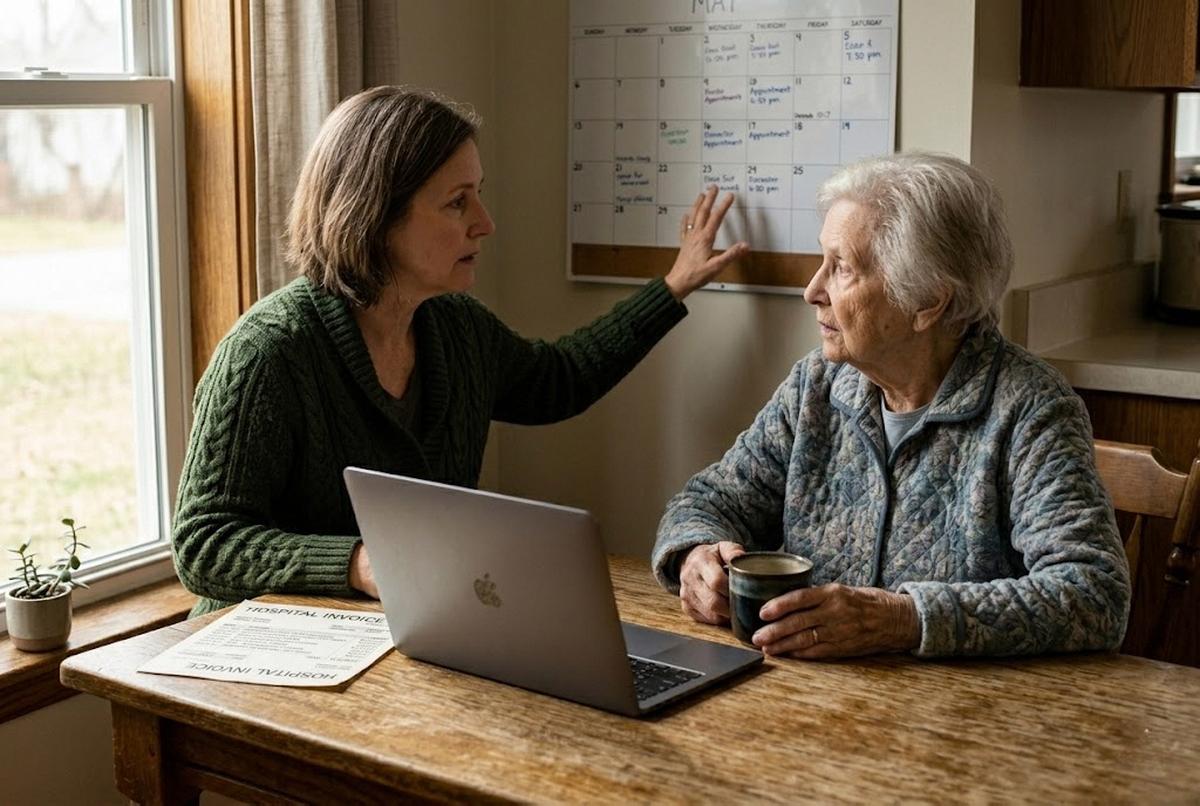
The most underrated tool, in my experience, is a shared digital calendar. Google Calendar, Apple Calendar, whatever your family runs. Put every doctor's appointment, pharmacy refill date, home aide schedule, and family visit on one shared calendar. Everyone sees it. Nobody can say they forgot. My wife set this up for our family when Papa moved to assisted living, and the number of "Wait, when was his cardiology appointment?" texts dropped to zero overnight.
Video calls seem obvious, but I want to push you beyond the weekly FaceTime. Schedule a specific time. Make it routine. My mom and I talk every Sunday at 4 PM. She sits in her favorite chair in the living room. I can see the room behind her. Is it tidy? Are the lights on? Is she dressed? You learn to read a lot from a video call if you're paying attention. The ElliQ companion robot I reviewed can even fill in between calls with daily check-ins and mood tracking.
For families dealing with cognitive decline, a GPS tracker like the Jiobit ($12.99/month) or Apple AirTag ($29, no subscription) attached to a keychain or shoe can provide peace of mind if your parent wanders. A fall detection pendant like Medical Guardian ($29.95/month) or the Apple Watch with fall detection adds another layer of safety for parents living alone.
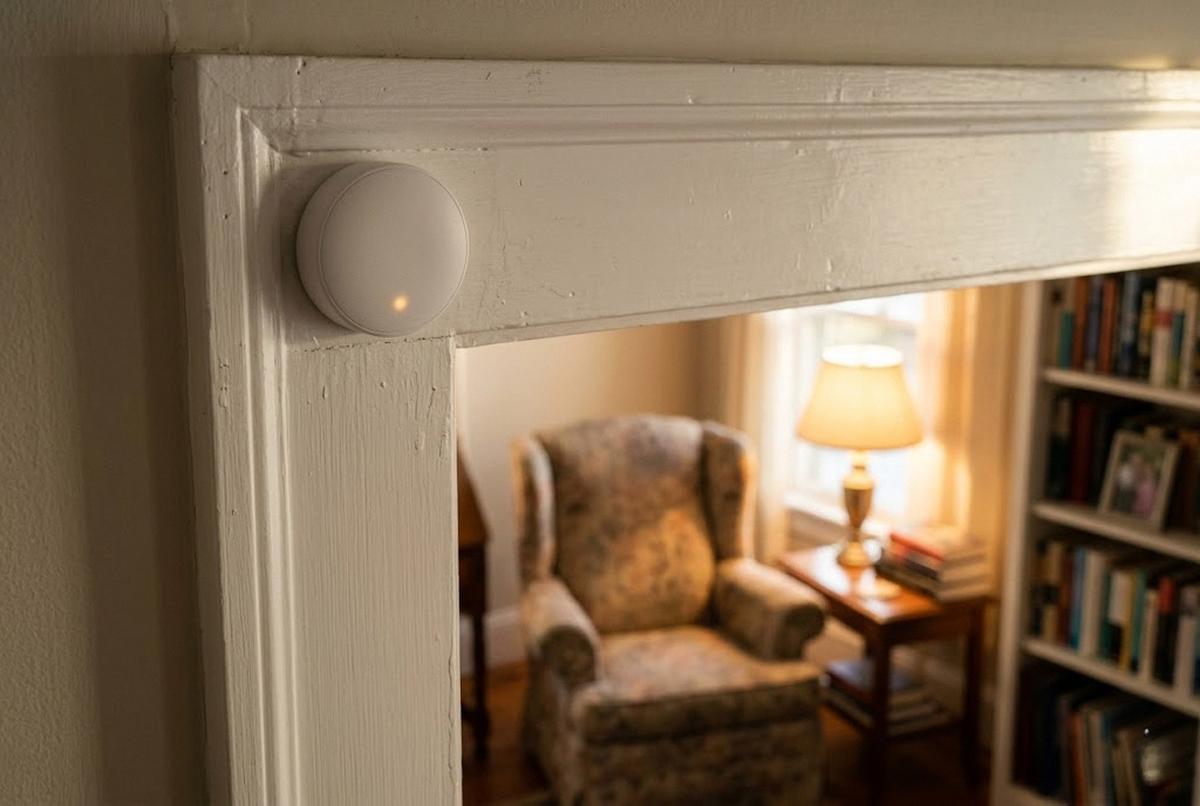
Smart home sensors are the silent layer most people skip. A water leak sensor under the sink ($15 from Govee). A motion sensor in the hallway alerting you if there's no movement by 10 AM. A smart plug on the coffee maker, so you know she turned it on this morning. Samsung SmartThings or Apple HomeKit tie these together into one app. None of these replace being there. All of them buy you information.
Coordinating with Local Helpers
Technology only gets you so far. At some point, someone needs to physically be in that house, in that neighborhood, in that town. And if it can't be you, you need to build a team.
The hardest part for me, at first, wasn't finding help. It was asking other people to check on my parent. Filipino families, in particular, carry this weight differently. Utang na loob runs deep. A debt of gratitude toward your parents, an unspoken expectation you'll be the one to take care of them. Asking a neighbor or a hired aide to do what you feel you should be doing yourself comes with guilt that's hard to explain to people who didn't grow up with it.
But guilt doesn't fix a water heater. So you build the team.
Neighbors are your frontline. Introduce yourself. Give them your phone number. Ask if they'd be willing to knock on the door if they notice the mail piling up or the lights staying off. Bring cookies. Bring lumpia. Whatever works. When Tita Peachy's son moved to Texas for work, he made a point of meeting every neighbor on the block before he left. Two of them still text him if anything looks off. One of them mows the lawn! People are good, mostly! You just have to ask.
Faith communities are an untapped resource. If your parent attends church, temple, or mosque, talk to the pastor or community leader. Many congregations have care committees, lay ministers, or volunteer visitor programs specifically for homebound or aging members. My mom's church has a group of women who rotate visits to members who can't get to Mass. They bring communion, sure. But they also bring conversation, which matters more than most people realize.
Hired home aides are the professional layer. Home health aides cost between $20 and $35 per hour depending on your state and the level of care needed. In Michigan, the average is about $28/hour according to Genworth's 2025 Cost of Care Survey. You can find aides through agencies like Home Instead, Visiting Angels, or Comfort Keepers. Agency aides are bonded and insured, important if something goes wrong. Independent aides are cheaper but you're responsible for vetting, payroll taxes, and backup coverage if they call in sick.
And frankly, the coordination is the hard part. Not finding helpers. Coordinating them. Who's coming on which day? Does the aide know about the rheumatologist appointment on Thursday? Did the neighbor notice the porch light has been out for a week?
A shared document solves this. I use a simple Google Doc titled "Mom's Care Team" with three sections: contact list (names, phone numbers, roles), weekly schedule (who's there when), and notes (anything worth noting from the week). Everyone on the team has the link. Everyone can add notes. Low-tech, effective, free.
Managing Medical Appointments Remotely
Long-distance caregiving gets genuinely stressful here. Your parent has a cardiology appointment next Tuesday. You're 600 miles away. What do you do?
First, make sure you have HIPAA authorization. Without it, no doctor's office will tell you anything. Not the diagnosis, not the test results, not even whether your parent showed up. HIPAA authorization forms are available at every provider's office and most are also downloadable from their websites. Your parent signs the form, lists you as an authorized contact, and the office keeps it on file. Do this for every single provider. Every one. The PCP, the cardiologist, the rheumatologist, the dentist. I spent one Saturday afternoon helping my mom sign seven HIPAA forms. Seven different offices. One afternoon. Worth every minute.
Telehealth is a genuine lifeline for long-distance caregivers. Medicare now covers most telehealth visits without geographic restrictions for established patients. Your parent can see their doctor from the living room couch while you join the call from your home office. Most telehealth platforms allow a third party to join. Call the doctor's office ahead of time and ask how to get added. I've sat in on three of my mom's telehealth appointments from my desk. The doctor sees both of us, so questions get asked in real time. My mom doesn't have to remember everything the doctor said because I'm taking notes in real time.
For in-person appointments your parent needs to attend, build a system. Designate a local medical advocate. A paid aide, a trusted friend, a family member nearby, someone who accompanies your parent to appointments. They take notes. They ask the questions you texted them beforehand. They call you from the parking lot after and debrief.
Keep a medical binder. Physical, not digital. A three-ring binder with tabs: medications (name, dosage, prescribing doctor, pharmacy), insurance cards (copies), appointment history, test results, and a one-page medical summary your parent can hand to any new provider. My dad's medical binder traveled with him from the house to assisted living to every ER visit. The nurses always said the same thing: "I wish every family did this."
Actually, let me add one thing I didn't figure out until embarrassingly late. Patient portals. Most health systems have them now. MyChart, FollowMyHealth, Athenahealth. If you have HIPAA authorization and your parent's login credentials (or proxy access through the portal), you can see lab results, upcoming appointments, and medication lists from anywhere. Setting up proxy access through MyChart took me about fifteen minutes and a faxed authorization form. Fifteen minutes! And now I see my mom's blood work before she does.
The Emotional Toll Nobody Prepares You For
Let me talk about the hard part.
Not the logistics. Not the technology. The feeling sitting in your chest at 11 PM when your phone buzzes and you see your parent's area code and your first thought is: something happened.
The National Alliance for Caregiving found long-distance caregivers report higher levels of emotional stress than those who live nearby. Sounds backward until you've lived it. When you're close, you see your parent every day. You know how they looked this morning. You know the fridge is stocked. You have data. When you're far away, you have imagination, and imagination is always worse.
I talked to a reader last month who moved to Denver for work. Her mother lives alone in a small town in Ohio. She told me she keeps her phone on the loudest setting, even at work, even at dinner, afraid of missing the call. She checks her Ring doorbell app six times a day. She feels guilty when she goes out with friends. She cries in her car sometimes, in the parking garage at her office, because she can't remember if her mom mentioned a headache on Monday or if she imagined it.
No clean answer exists for this. No app fixes it.
But I have found a few things helping with it. Scheduled worry time. Sounds strange, I know. But designating a specific window each day, twenty minutes after dinner, whatever, where you allow yourself to check in, review the camera feed, look at the patient portal, and then close it, helps contain the anxiety. It doesn't stop it. But it keeps it from bleeding into every hour of every day.
Therapy is not a luxury. It's a tool. Caregiver burnout is real and documented. The AARP estimates family caregivers spend an average of $7,242 per year out of pocket. Add emotional exhaustion to financial strain and you've got a recipe for breakdown. A therapist who understands caregiver stress, and there are specialists for this, can offer coping strategies Google can't.
Peer support fills a gap nothing else does. The Caregiver Action Network (caregiveraction.org) runs a peer support line at 1-855-227-3640. The Family Caregiver Alliance (caregiver.org) has an online support group specifically for long-distance caregivers. The Well Spouse Association (wellspouse.org) supports partners of chronically ill or disabled individuals. Talking to someone who gets it, who's also checking their phone at 3 AM, who also feels guilty about missing Thanksgiving, helps more than I can explain in a paragraph.
When Distance Caregiving Isn't Enough Anymore
There comes a point.
Maybe it's the third fall in two months. Maybe it's the stove left on overnight. Maybe it's the phone call where your parent says something confusing and you count four times this week already.
Recognizing the signs that your parent needs more help is one of the hardest things an adult child has to do. Harder from a distance, because you can't see the weight loss, the unwashed dishes, the expired food in the back of the fridge. You're relying on reports from people who may not want to worry you.
Warning signs distance caregiving may no longer be sufficient:
- Repeated falls or near-falls, even with home modifications
- Medication errors despite automated dispensers
- Noticeable cognitive decline on calls (confusion about day, time, recent events)
- Social withdrawal (canceling visitors, not answering the phone)
- Inability to manage basic hygiene or meal preparation
- Fire risks (stove, space heaters, candles left unattended)
- Your local care team expressing concern
When you reach this point, the options narrow to three. Moving your parent closer to you. This uproots them from their community, their doctors, their home. It's brutal. But proximity solves the distance problem entirely. Moving yourself closer to your parent. Harder to do, especially with a career and family of your own. Some employers are more flexible now than they were five years ago, and the Family and Medical Leave Act provides up to 12 weeks of unpaid, job-protected leave for caregiving. Not enough time, but something. Transitioning to assisted living or a care facility near your parent. This was the path we took with my dad. The cost is real. Genworth's 2025 data puts the national median for assisted living at $5,511 per month. In Michigan, it's closer to $5,100. Choosing the right facility is its own marathon.
None of these options are easy. All of them require conversations that hurt.
The Financial Reality of Caregiving from Afar
Real numbers, because vague advice about "budgeting" helps no one.
The MetLife Mature Market Institute estimated long-distance caregivers spend an average of $8,728 per year on caregiving-related expenses. For nearby caregivers, that number is $4,570. The difference? Travel.
Round-trip flights add up fast. If you're visiting quarterly, that's four flights at $250 to $600 each, depending on where you're flying. Hotels, rental cars, meals. My parents' neighbor Mang Ben has a son in Seattle who flies to Detroit four times a year. Travel costs alone run about $4,800 annually, before any actual care costs.
Beyond travel, you're paying for services a nearby caregiver could do for free: home aide visits, lawn care, grocery delivery, ride services to appointments. Every one of those costs money because you can't be the one doing it.
Tax relief exists but it's limited. The Dependent Care Tax Credit may apply if your parent qualifies as your dependent (they must earn less than $5,050 in 2026 and you must provide more than half their support). Some employers offer Dependent Care FSAs that let you set aside up to $5,000 pre-tax for qualifying elder care expenses. And the medical expense deduction on Schedule A of Form 1040 lets you deduct medical costs exceeding 7.5% of your adjusted gross income, including some home health aide costs, if you itemize.
Talk to a CPA. The tax code for caregiving is specific enough that professional advice will likely save more than the consultation costs. Also check whether your employer offers caregiver support benefits. About 24% of large employers now offer elder care assistance according to the Society for Human Resource Management: backup care services, care management referrals, or subsidized platforms like Care.com.
Your Long-Distance Caregiving Toolkit
One last thing. Something practical. A checklist you can work through this month, not someday.
This weekend:
- Call your parent. Not a text. A video call. Look at them. Look at the room behind them
- Ask for their doctor's names, pharmacy information, and insurance card numbers. Write them down
- Download the HIPAA authorization form from their primary doctor's website. Fill it out together over the phone if needed
This month:
- Set up a shared calendar with every appointment and medication refill date
- Identify two local contacts: a neighbor and one other person (friend, church member, aide) who can check in
- Create a care team Google Doc with contact information and a weekly schedule
- Research home health aide agencies in your parent's area. Call at least two for pricing
- Set up patient portal access for their health system
This quarter:
- Install at least one smart home device (doorbell camera, motion sensor, or leak detector)
- Investigate medication management options if your parent takes 3+ daily medications
- Talk to a CPA about caregiver tax deductions
- Look into a medical alert system if your parent lives alone
- Have the conversation about what happens if remote caregiving isn't enough. Have it before you need to
Yeah, a lot of work. And it is. Long-distance caregiving is harder than people who haven't done it will ever understand. You're carrying the weight without the daily assurance of seeing your parent's face across the table.
But five million Americans are doing it right now. And the ones who build systems, who ask for help, who pick up the phone on a Wednesday night even when they're scared of what they'll hear, those are the ones who make it work.
My mom still calls on Wednesdays sometimes. Not always with emergencies. Sometimes to tell me the tomatoes are coming in. Sometimes to ask how the kids are. Sometimes just to hear my voice, which I think is really about me hearing hers.
If you're far from a parent you love, I see you. I know the guilt, the phone anxiety, the constant low hum of worry. You're not failing them by living where you live. You're doing the best you can with the miles you've been given. And that counts for more than you think.
This I promise: the distance doesn't have to mean helplessness. Not if you build the right system around the people who matter most.