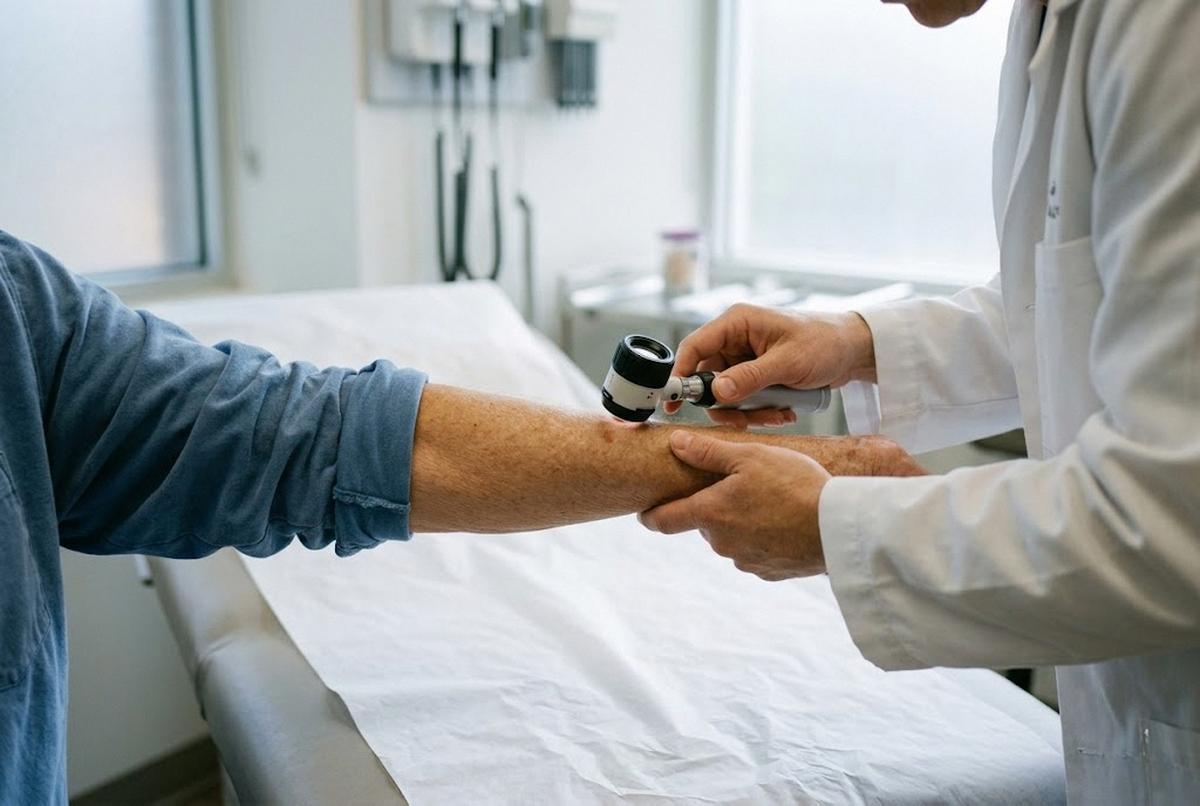
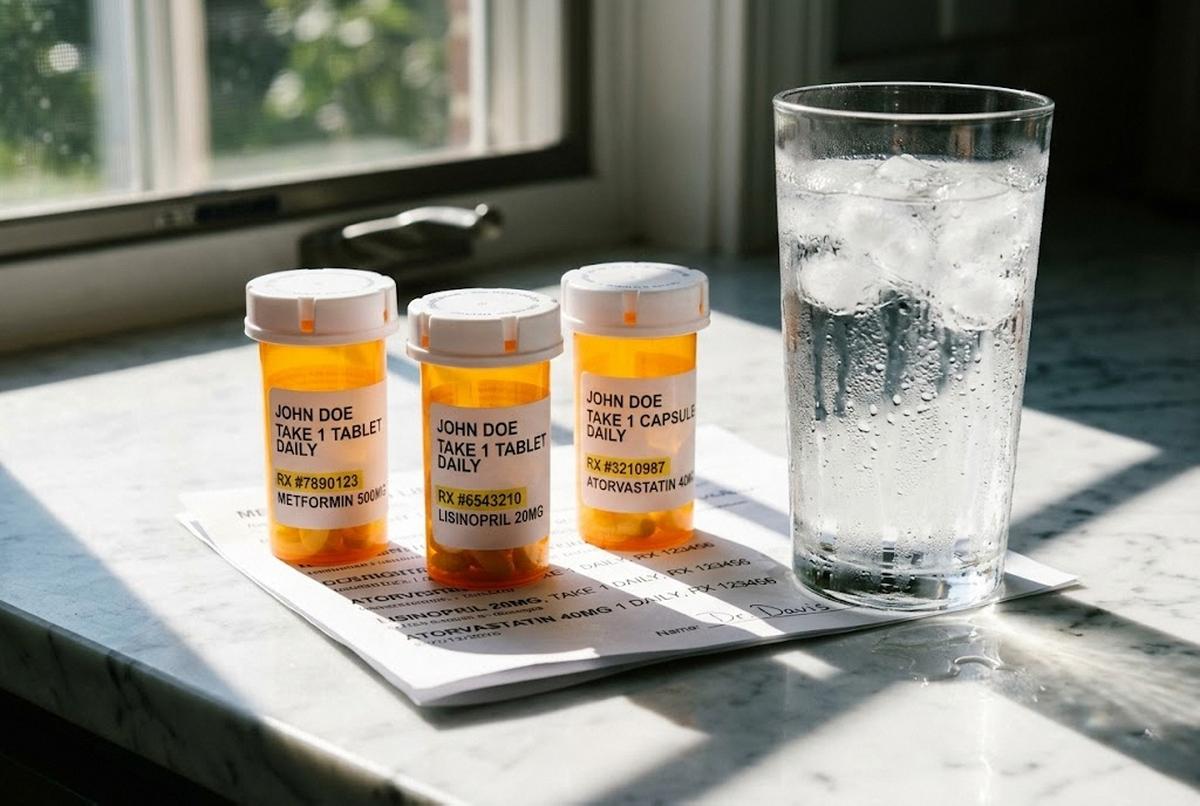
The 18 months Frank insisted he didn't need a new knee
The morning Frank finally called the orthopedist's office, he was sitting at the kitchen counter eating cereal and trying not to put weight on his left leg. It was a Tuesday in early 2021. He had been at the arthritis game for about 18 months by that point — diclofenac gel, acetaminophen most nights, a cortisone shot the prior September that bought him roughly four months of decent sleep, a hyaluronic acid series in January that did almost nothing he could measure. He looked at me over the cereal bowl and said, "I think it's time." Then he picked up the phone.
I was the one who, two years earlier, had told him he was overreacting. I was wrong. He sleeps now. That whole arc — the 18 months of resistance, the shots that worked until they didn't, the morning he finally made the call — is what this article is about. Not the pharmacy shelf. The appointment after the pharmacy shelf.
Quick disclaimer, same as every health piece I write: I'm 72, a former English teacher with a research habit, not a doctor. Frank is the engineer; I am the one who reads the guidelines.
When the OTC aisle stops being enough
Last month I wrote about the OTC arthritis shelf — what the guidelines support, what to skip, what to start with. That piece closed with a script for the appointment when the topicals and the acetaminophen and the exercise have stopped doing enough. This article picks up exactly there.
Here's the threshold, roughly. If you have worked through topical NSAIDs for three months, kept up some version of an exercise habit, made a reasonable run at the weight conversation if it applies, and you still have pain that wakes you at 4 a.m. or limits how far you can walk — that's the appointment. The CDC estimates about 32.5 million U.S. adults have osteoarthritis, with prevalence climbing sharply after 60. Knees first, then hips, then hands. Most people I know in this age bracket have something. The question is what the next layer looks like.
The grading scale your X-ray is using
When they hold your X-ray up to the lightbox, they're applying the Kellgren-Lawrence grading scale, standard since 1957. Stage 1: possible narrowing of the joint space. Stage 2: definite narrowing and small bone spurs. Stage 3: moderate narrowing, multiple spurs, some bone deformity. Stage 4: bone-on-bone, no visible joint space left.
Here is the catch. Grade and pain don't always agree. There are people walking around with Stage 4 X-rays who report tolerable discomfort, and people with Stage 2 X-rays whose joints are running their lives. Frank's left knee was a clear Stage 3 going into the appointment that ended in his replacement. The orthopedist said, gently, that the X-ray wasn't what was going to decide the surgery — Frank's daily function was. The imaging is a piece of the picture. It is not the picture.
The prescription tier — what's actually on the menu (and what isn't)
Duloxetine. This is the surprise that nobody warns you about. Duloxetine — brand name Cymbalta — is an SNRI antidepressant the FDA also approves for chronic musculoskeletal pain. The 2019 American College of Rheumatology guidelines conditionally recommend it for hand, hip, and knee OA. Typical dose 30 to 60 milligrams a day, and meaningful pain relief, if it comes, shows up around 12 to 14 weeks — not 12 to 14 days. Particularly useful for patients whose pain feels bigger than the X-ray would predict (a phenomenon called central sensitization), for patients whose stomach or kidneys make oral NSAIDs a non-starter, and for patients with depression or anxiety in the mix.
What to know going in: nausea in the first two weeks is common and usually fades, the falls risk in older adults is real (especially in the first month), and the hyponatremia risk — low sodium — climbs if you're also on a diuretic. Worth a careful conversation with whoever manages your prescriptions.
Tramadol. Here's the thing most people don't realize: tramadol is an opioid. A Schedule IV controlled substance, weaker than morphine but the same drug family. The 2019 ACR guideline gives it a conditional recommendation — narrower and more cautious than its strong recommendation against stronger mu-agonist opioids, but still inside the opioid category. Turns out the bigger problem for older adults is the rest of the package. The 2023 American Geriatrics Society Beers Criteria explicitly flag tramadol for serotonin syndrome risk when combined with SSRIs or SNRIs (medications a lot of older adults are already on), seizure risk, and a falls-and-fracture signal. For OA in adults over 65, the math is generally unfavorable unless other options have failed.
Stronger opioids. ACR 2019 strongly recommends against stronger opioids (oxycodone, hydrocodone, morphine) for OA. The 2022 CDC opioid prescribing guideline says the same for chronic musculoskeletal pain in general. Limited long-term benefit, real risks of cognitive impairment, falls, dependency. Any orthopedist who reaches for it first is not following the playbook.
The injection menu (the part nobody quite walks you through)
This is where Frank spent most of those 18 months. Here is what was on offer and what the evidence actually says.
Corticosteroid injections. Strongly recommended by ACR 2019 for short-term knee and hip OA pain. Typical relief: 4 to 12 weeks. Most orthopedists cap them at three or four per joint per year. Here is the wrinkle that earned a JAMA paper. McAlindon and colleagues (JAMA, 2017) ran a two-year trial in which patients got either triamcinolone or saline injected every 12 weeks. The cortisone group showed greater cartilage volume loss on MRI, with no meaningful difference in pain. This does not mean a shot or two is harmful — Frank's September 2020 cortisone shot was the best four months he had that whole year. It does mean repeated, scheduled, every-12-weeks-forever cortisone is not a long-term strategy.
Hyaluronic acid (HA) injections. ACR 2019 issues a conditional recommendation against HA for knee OA. The evidence is mixed, many positive trials are industry-funded, effect sizes are modest. Medicare generally covers it for the knee, though coverage policies vary by region and Medicare Administrative Contractor, so you will encounter orthopedists who offer it. Honest take: if you have failed cortisone and want to try something before surgery, not unreasonable — but go in with realistic expectations. Frank's January 2021 series was the moment we both realized we were running out of road.
Platelet-rich plasma (PRP). They draw your blood, spin it down to concentrate the platelets, inject the concentrate into the joint. Not covered by Medicare. Out-of-pocket: $500 to $1,500 per injection, often a three-shot series. A 2021 systematic review in Cartilage by Belk and colleagues found PRP outperformed HA for knee OA at 3, 6, and 12 months — promising but not yet guideline-grade. A fair next question if you have tried cortisone, want to delay surgery, and can spend the money.
Genicular nerve block and radiofrequency ablation. The newer option most readers haven't heard of. The genicular nerves carry pain signals out of the knee. A diagnostic nerve block confirms they're the source; radiofrequency ablation (RFA) then disrupts them for 6 to 12+ months. A 2020 systematic review in Pain Medicine (building on Davis and colleagues' landmark 2018 sham-controlled trial) found significant pain reduction versus sham. Typically offered by interventional pain specialists. Right population: people who are not surgical candidates, or who refuse surgery and want one more option.
Physical therapy as the underused tool
Frank finally committed to physical therapy in February 2021. He should have done it 14 months earlier. So should I — not the patient but the cheerleader who kept saying he should rest the knee.
Here is what PT for osteoarthritis actually does, when it is good. It does not mean "do some exercises." For knee OA, the prescription centers on quadriceps strengthening — leg presses, straight-leg raises, mini-squats, step-ups. Quadriceps weakness is both a risk factor for knee OA progression and a contributor to pain severity, and the evidence on targeted quad work is decades deep. For hip OA: clamshells, hip abductor strengthening, pool walking. For hand OA: putty exercises, range-of-motion circles, pinch-grip work. Different prescriptions for different joints. Frank, the 74-year-old retired civil engineer who has read more technical manuals than the rest of the household combined, attempted the home program by treating it as an engineering problem — sets, reps, a notebook on the kitchen counter. Turns out PT works better when you actually show up to the sessions, which is the part the notebook did not solve. A six- or eight-visit course with a PT who knows OA — not generic "senior fitness" — is one of the most underused interventions in this entire conversation.
One specific program: GLA:D, which stands for Good Life with osteoArthritis in Denmark. Started in Copenhagen, now offered at a growing number of U.S. clinics (directory at glad.us). Two education sessions, 12 neuromuscular exercise sessions over about six weeks. A 2017 paper in Osteoarthritis and Cartilage by Skou and Roos showed sustained pain reduction and improved function at one year. If your area has a GLA:D-certified PT, it's worth a phone call.
A Medicare note. The old annual therapy cap was eliminated in 2018; there is no hard dollar limit on outpatient PT under Part B. There is still the KX modifier threshold, a paperwork checkpoint your PT has to clear when therapy costs exceed a set amount — $2,410 in 2025, adjusted annually. Past that, your therapist documents continued medical necessity and you keep going if it is justified. A PT script for OA is not a one-and-done; you can refresh it, get a tune-up, escalate the home program. The overlap with our falls-prevention exercise piece is significant.
Daily-living adjustments that are not generic
Short and specific, because the old version of this article had a "good posture" bullet that I found genuinely insulting on Frank's behalf.
For knee OA. The cue every PT I've ever encountered repeats: up with the good, down with the bad. Lead with the unaffected leg going up stairs, lower the affected leg first coming down. A raised toilet seat (3 to 4 inches added height) noticeably reduces knee load on sit-to-stand. Shower grab bars. A kitchen stool for tasks that involve standing more than 10 minutes. ACR 2019 conditionally recommends lateral wedge insoles for medial-compartment knee OA and unloader braces for unicompartmental disease — ask the orthopedist whether either applies to your X-ray. Our mobility aids guide covers the canes-and-walkers question.
For hip OA. A long-handled shoehorn (18 inches minimum), a sock-aid device, and the car-entry technique that took me longer to learn than I am proud of: back up to the seat, sit down first, swing both legs in together. Do not twist to get in.
For hand OA. Distribute force away from the small joints. Jar openers (OXO Good Grips is the standard). Electric can openers. Lever-style door handles instead of round knobs. Button hooks if buttons are getting fiddly. Use two hands to lift pans, slide things along the counter instead of lifting, downsize to lighter cookware. Cast iron is romantic and beautiful and not your friend after 70.
The surgical decision tree
This is the conversation Frank was avoiding for those 18 months, and it is the conversation that finally happened that Tuesday morning. So let me lay out what actually goes into it.
A total joint replacement is typically considered when conservative care has been worked through for six-plus months, pain limits sleep or walking a city block, and the imaging supports a procedure (usually Kellgren-Lawrence 3 or 4). The decision is driven by quality of life, not the X-ray grade in isolation. Frank's surgeon said something I have repeated to several friends since: "I do not operate on X-rays. I operate on people."
Knee vs. hip recovery — the honest difference. Hip replacement generally has the faster recovery: walking comfortably at six weeks, full function in three to six months. Knee is harder — six weeks before walking is comfortable, 6 to 12 months before full function. Frank's knee was 11 months before he stopped being aware of it every day. Anyone who tells you a knee replacement is a six-week recovery is selling you something. If OA is confined to one compartment of the knee (usually the medial side), a partial/unicompartmental replacement is sometimes better: shorter recovery, more bone preserved. Frank's disease was too distributed for partial; he had a total. Your X-ray decides this, not your preference.
Risks at 70+. DVT and pulmonary embolism (managed with blood thinners post-op), surgical site infection, and — the one I wish I had asked harder about — postoperative cognitive dysfunction. POCD is a real concern in adults over 70, particularly after general anesthesia. Worth a specific conversation with the anesthesia team before surgery. Frank's first three nights were rough. He came back. Not everyone snaps back as quickly.
The satisfaction number. The American Academy of Orthopaedic Surgeons and the larger orthopedic registries put one-year patient satisfaction after total knee replacement at roughly 80 to 85 percent. Bourne et al. in Clinical Orthopaedics (2010) pegged dissatisfaction at about 15 to 20 percent — residual pain, stiffness, or outcomes that did not match expectation. A knee replacement is one of the most successful operations in modern medicine, but not a guarantee. People who go in expecting a 22-year-old's knee come out disappointed. People who go in expecting to sleep through the night and walk to the mailbox without flinching tend to be the satisfied 80 percent.
Frank is in the 80 percent. He is also clear that he should have done it a year earlier.
The Tuesday morning script
If I were sitting across from a friend at the kitchen counter — and I have done a version of this with my book club, with Frank's golf friends, with a former student who emailed me out of the blue — here is what I would tell them to walk into the orthopedist's office and say:
"I have worked through [topical diclofenac / acetaminophen / exercise plan / weight conversation if relevant] for [X months]. My pain is still [number] out of 10 and keeping me from [specific activity]. I'd like to understand the injection options, including the cortisone-cartilage data. I'd like a PT referral, ideally to someone who runs GLA:D. And I'd like to understand what would have to be true for joint replacement to be the right conversation."
That is the appointment. That is the difference between leaving with a pamphlet and leaving with a plan.
What changed at the kitchen counter
The morning Frank made the call, he hung up the phone, finished his cereal, and went out to the patio. He did not say much. I sat down across from him with my coffee and we looked at the saguaro that's been outside our patio since 2015. Forty-seven years of marriage and you don't always need to say the thing. You just sit. The thing got said when the phone got picked up.
He had his surgery that May. I was a terrible nurse for eight weeks and an excellent cheerleader — a separate article entirely. The point of this one: the 18 months he resisted were not wasted, exactly. He tried what was reasonable to try, in roughly the order he should have tried it. But there is a moment when the OTC aisle is a memory and the injection menu has run out, and that is the moment the appointment is the answer. Not a defeat. A plan.
If Frank were sitting next to me right now — and he is, three feet away on the patio reading the sports section — he would say two things. He should have called the orthopedist a year earlier. And he sleeps now. After 18 months and a kitchen-counter Tuesday, those are the two sentences the rest of this article was trying to support.