There is a poster in my dermatologist's waiting room. Cursive font. A cartoon sun wearing sunglasses. It says, in shimmering pink, Laughter Is the Best Medicine!
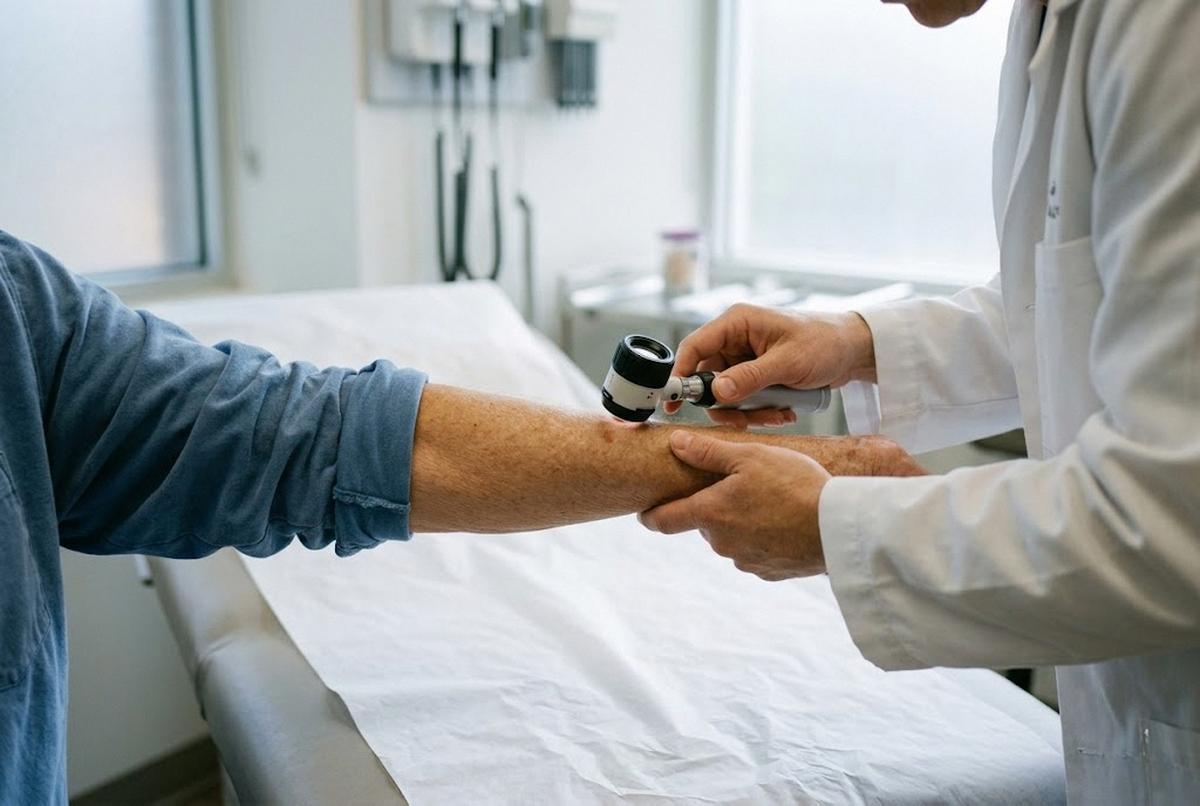
I sat under that poster last Tuesday for forty-one minutes, waiting to be told whether the spot on my forearm was a freckle or a problem. I did not laugh once. I read a Good Housekeeping from 2021 and thought about whether the woman across from me, who was breathing loudly through her nose, was doing it on purpose. I thought about Frank, who had dropped me off and was, by then, on the seventh hole. I thought about my own forearm. The poster did not help. The poster, frankly, was making things worse.
Here's the thing about that phrase. It comes from Proverbs — "A merry heart doeth good like a medicine" — and it was not, originally, a prescription pad. It was a moral observation by someone who had never had a melanoma scare in a waiting room. Somewhere between the King James Bible and the Hallmark aisle, it became a slogan. And then it became a poster. And then it became a hashtag. And by the time it shows up on a coffee mug at Cracker Barrel, it has done what English teachers call losing the plot.
I taught English for thirty-four years. I know a dead phrase when I see one. "Laughter is the best medicine" is a corpse. We should bury it.
What is true — what is actually, irritatingly, scientifically true — is that laughter does measurable things to a human body. Not magical things. Specific, modest, real things. And after seventy-two years of laughing at Frank and being laughed at by Frank and laughing with my book club ladies until one of us has to leave the room, I have opinions about which kinds count.
What the 1989 study actually found
In 1989, a researcher named Lee Berk at Loma Linda University did the experiment that everyone since has been quoting and almost nobody has read. He took ten healthy men, showed them a sixty-minute humor video, and drew their blood at intervals. The men who watched the video had lower cortisol, lower epinephrine, and a bump in natural killer cell activity compared with men sitting quietly in a separate room.
That is the whole study. Ten men. One video. One control group sitting in fluorescent light. It has been cited approximately six thousand times since, which is more than The Great Gatsby gets in a typical English Lit syllabus, and that is saying something.
The Berk findings have held up reasonably well. Larger studies — including a 2016 meta-analysis in Advances in Mind-Body Medicine that pooled humor-therapy trials for depression — found small to moderate effects on stress hormones and mood. Not miraculous. Real. The Mayo Clinic, which is not in the business of dramatic claims, will tell you that a hearty laugh stimulates circulation, briefly drops blood pressure, and relaxes the muscles for up to forty-five minutes afterward.
Fine. I accept all of this. It is also true that a brisk walk does many of the same things and you don't have to find anything funny to do it. So why do I still believe in laughter? Not because it cures anything. Because it makes the unbearable parts of being alive at seventy-two slightly less unbearable. That is not nothing. That is, in fact, a lot.
Why laughter yoga is, I am sorry, ridiculous
There is a movement called Laughter Yoga, founded by a doctor in Mumbai in 1995, in which adults gather in parks and chant "ho ho ha ha ha" at one another until somebody starts genuinely laughing and then it becomes contagious. The theory is that the body cannot tell the difference between forced and spontaneous laughter, so the physiological benefits accrue either way.
I have read the research. It is mixed. Some small trials show cortisol reductions; others show nothing beyond a placebo effect. What is unambiguous is that I would rather floss with a power line than do this in public.
My neighbor Lorna, two doors down from Jerry Kellner, went to a laughter-yoga session at her church last fall and came home flushed and triumphant and tried to demonstrate it to me on the sidewalk. Ho ho ha ha ha. Right there. In broad daylight. With Bismarck the Pomeranian watching from across the street. I told her it looked wonderful and went inside and stood at the kitchen window for a while.
It is not that I am against organized laughter. I am against organized laughter that performs itself. Real laughter ambushes you. It does not schedule itself for 10 AM on Wednesdays at the community center. It happens because Frank has said something only Frank would say, or because Marcy has read the wrong chapter for book club again, or because the receptionist at the cardiologist's office has called me by the wrong name three appointments in a row and I am about to give up and just answer to Patricia.
If chanting in a park works for you, by all means. But please don't make me. My body, at this age, has earned the right to choose its own humiliations.
The kinds of humor that have actually done something for me
What works, in my experience and in roughly that order:
Frank's deadpan. Forty-seven years of marriage and the man can still surprise me. Last week we were watching the news. A correspondent was on the lawn of someone's mansion describing the contents of a divorce filing. Frank said, without looking up from his crossword, "They should have had separate refrigerators." That was it. That was the whole joke. I laughed for ten minutes. Then I made him repeat it at dinner. Then I told Marcy on the phone. The cortisol drop, I assume, is still ongoing.
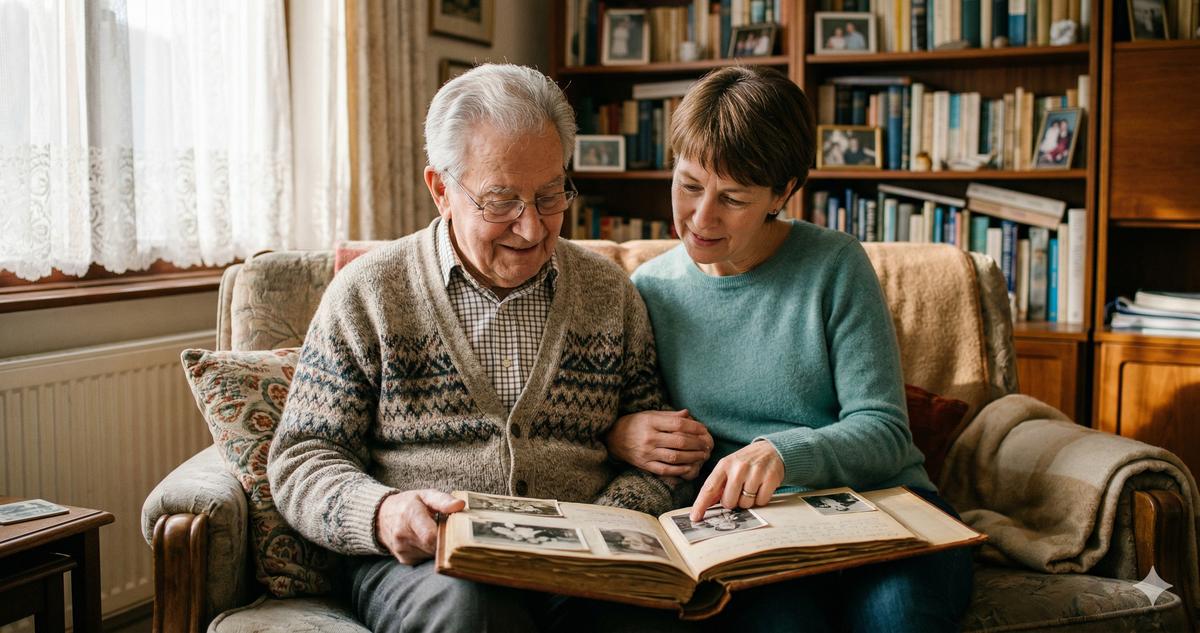
The book club. We have been meeting since 1998. There are seven of us now, down from twelve — we have lost some to death, some to Florida, one to a second marriage in Ojai that we still don't fully understand. The wine is plentiful and the book is optional. Last month Peg, from book club, arrived having read the wrong novel entirely. The same author, different title. She had thoughts. She had strong thoughts. We did not correct her for forty-five minutes because the alternative was less funny than what was happening.
Old movies, specifically The Thin Man. Frank and I watch them on rotation. Nick and Nora Charles, drinking through a murder mystery, are funnier than anything streaming has produced in fifteen years. There is a scene where Nora asks Nick how many drinks he's had and he says "This will make six martinis," and she tells the bartender to line up five more so she can catch up. I have laughed at this line approximately sixty times. It still works. Comedy that has held its shape for ninety years is doing something different than a TikTok.
My grandchildren saying accidentally true things. Lily, who is eight, told me last summer that I smell like "the inside of a purse," which is not flattering but is, on reflection, completely accurate. Jack, twelve, informed Frank that his golf swing "looks like a man trying to remember a phone number." I wrote that one down.
Notice what is on this list and what isn't. No comedy specials. No laughter clubs. No funny cat videos, although I have nothing against cats. The humor that has actually changed the texture of my week is humor that arrived through people I love, or art that has earned its longevity, or a child who hasn't yet learned to be polite.
What humor is for, when you are seventy-two
My mother Dorothy, who died in 2012 and whose wit I have spent six decades trying to inherit, used to say that humor was "how you survived the parts you didn't choose." She meant my father's quiet years, the cancer scare in 1987, the cousin who married badly twice. She did not mean Reader's Digest one-liners. She meant the daily, unglamorous work of finding the absurd inside the awful and using it as a handle to carry the thing.
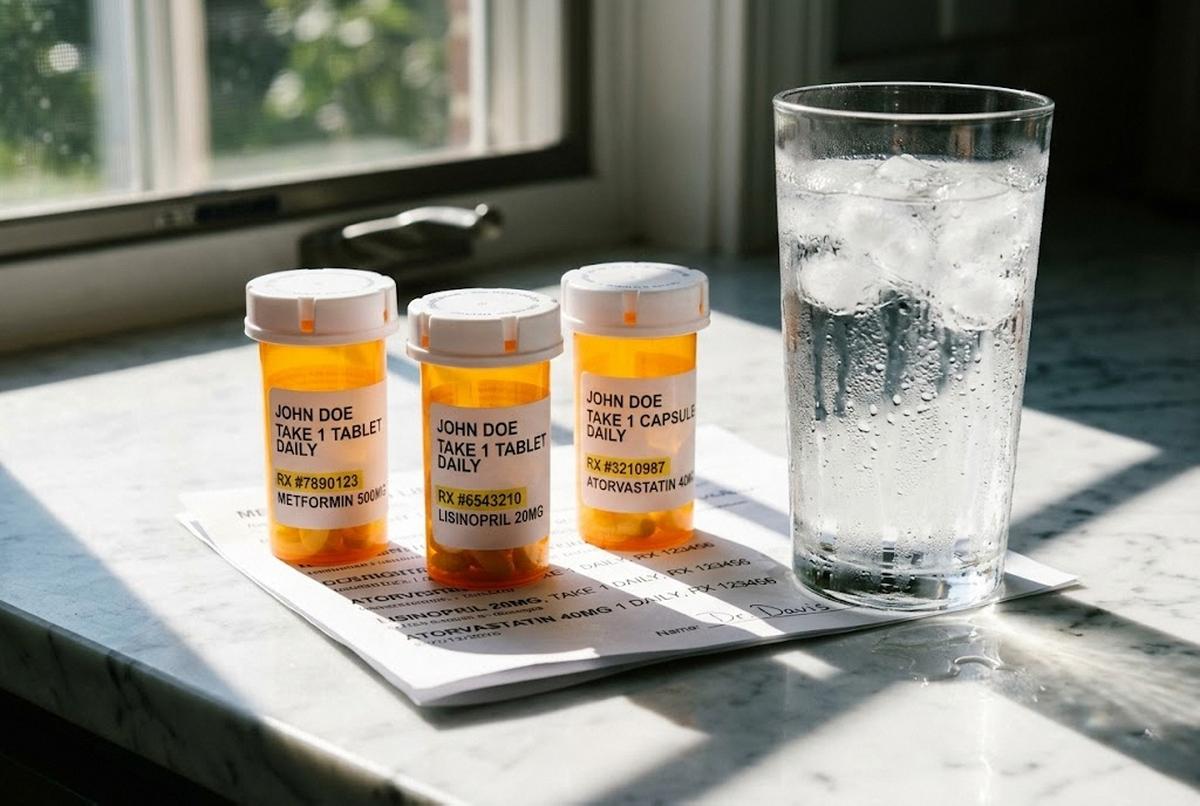
This is what the posters miss. Laughter at seventy-two is not preventive medicine. It is not a heart-healthy supplement you can take instead of a statin. It is the technology by which experienced humans process loss, indignity, and the specific cruelties of getting older — including the cruelty of being told, in cursive on a dermatologist's wall, that we should be laughing more.
Frank and I went to the Desert Botanical Garden last month. We had been three or four times before. Frank, as a rule, walks through the succulent exhibit with his hands behind his back, reading every placard, and at the end says one of two things: that was a lot of cactus, or they really lean into the spiky theme. I have been laughing at these two sentences for ten years. The cactus does not get funnier. Frank does not get funnier. What gets funnier is that he keeps saying them, and I keep loving them, and we keep being people who have been doing this for forty-seven years.
That is what laughter is for. Not health. Continuity.
What to do, if you must do something
If you have read this far and still want a takeaway, fine. Here is mine.
Stop trying to engineer laughter. Stop downloading apps that send you a daily joke. Stop joining clubs that schedule it. Identify, instead, the three or four people in your life who can make you laugh without trying, and call them more often than you do. If one of them is your spouse, congratulations — you have won the only lottery that pays out at our age. If one of them is dead, watch a movie they loved and laugh at the parts they would have laughed at. That counts. That is not a metaphor. It counts.
Watch comedy that survived its decade. The Thin Man, His Girl Friday, early Steve Martin, late Joan Rivers, Frasier if you must, but only the Niles episodes. If you are reading this and you are under sixty, watch The Mary Tyler Moore Show. I will not explain why. You'll figure it out.
And when somebody on the internet, or in your inbox, or on a needlepoint pillow at HomeGoods, tells you that laughter is the best medicine, smile politely and remember that medicine cures things. Laughter doesn't. Laughter just makes the part between diagnoses easier to inhabit.
Which, when you think about it, is more than most prescriptions can promise.
The spot on my forearm, by the way, was a freckle.
I laughed in the parking lot. Frank was on the eleventh hole and didn't pick up. I called Marcy.