A friend called me last fall and said his mother had been moved to hospice. I asked when. He said, "Day before yesterday." She died four days later. The hospice team (the nurse, the social worker, the chaplain, the bath aide, the medications delivered to the house with no copay) had four days to do work that's designed to take weeks.
I keep thinking about that call. The Medicare data is brutal on this point: the median hospice stay in the U.S. is around 18 days, and roughly a quarter of patients are enrolled in the last week of life (NHPCO Facts and Figures report). Families don't get the benefit they paid into their whole working lives because nobody, not the oncologist, not the cardiologist, not the discharge planner, said the word "hospice" out loud until everyone was already in the hospital parking lot wondering what to do next.
I am not the master of this yet. Watching my father's health move in one direction has forced me to learn the mechanics, and what I've found is that the system is not actually that complicated once somebody draws you a map. The brochures are useless. The brochures use words like "journey" and "support." What you need are the rules.
Palliative and hospice are two different things
This is the single point of confusion that costs families the most, so I want to get it out of the way first.
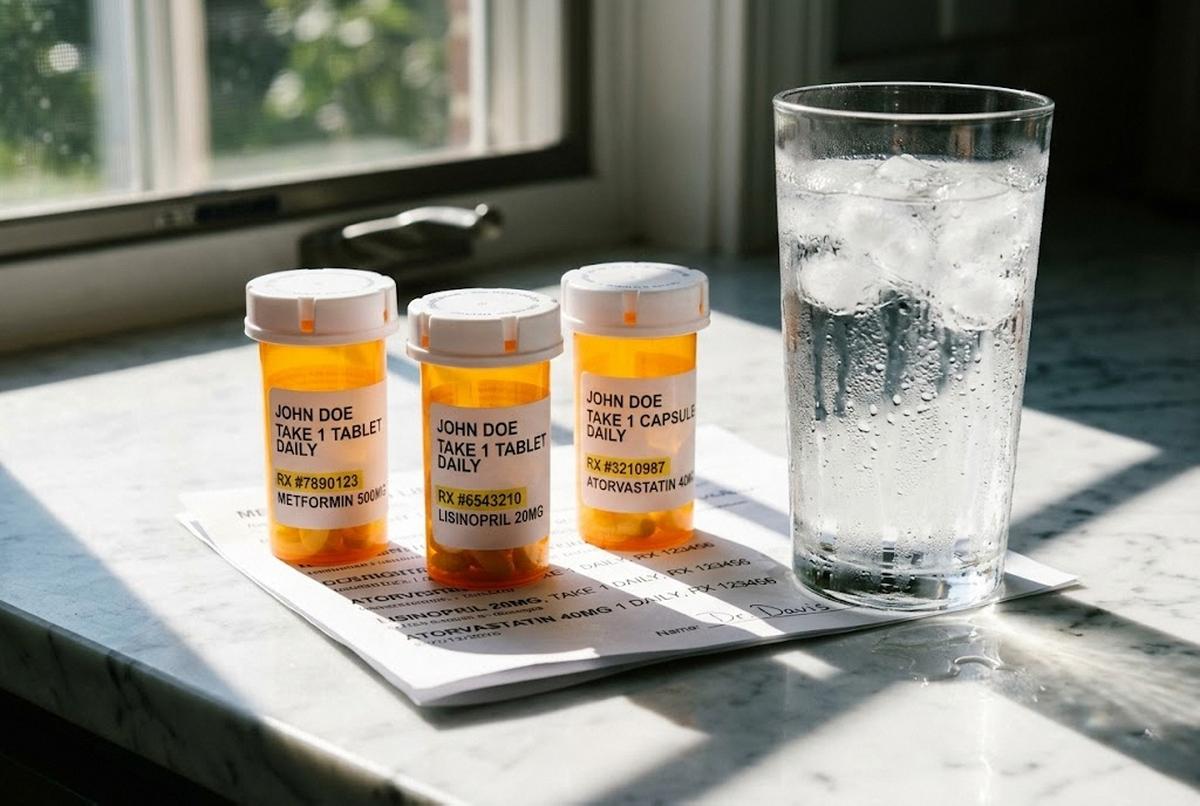
Palliative care is symptom management for any serious illness. It runs alongside whatever treatment your specialist is doing. You can be on chemo, getting dialysis, on the transplant list, and still see a palliative team for pain control, nausea, breathlessness, anxiety, sleep, appetite, the works. There's no prognosis requirement. You can start palliative care the day you get a serious diagnosis, and you can keep curative treatment going. It's billed through regular insurance. Medicare Part B covers outpatient visits, Part A covers inpatient, with usual copays and deductibles applying.
Hospice is a specific Medicare benefit under Part A. To enroll, two physicians (typically your attending and the hospice medical director) certify in writing that, if your illness runs its usual course, you have six months or less to live. You sign a paper electing the hospice benefit, which means you agree to stop curative treatment for the terminal diagnosis. In exchange, Medicare covers essentially everything related to that illness: the visiting team, the medications, the hospital bed delivered to the house, the oxygen, the wound care, the bereavement counseling for your family for thirteen months after. No deductible, a $5 cap on each outpatient prescription, and 5% coinsurance on the rare inpatient respite stay.
Note the trade. Palliative care has copays but doesn't ask you to give up anything. Hospice is close to free but asks you to stop fighting the disease that's killing you. That's the actual choice, and it's the one nobody wants to say cleanly.
How to actually get a referral
For palliative care, ask. The script is short: "I'd like a palliative care consult to help manage symptoms." Any specialist or PCP can place the order. Most hospitals over 300 beds have a palliative team. The Center to Advance Palliative Care reports that roughly 72% do. Outpatient is harder to find. The directory at getpalliativecare.org will show you what exists within driving distance of your zip code. If your hospital has a team and you've been admitted recently for the same condition twice, you can usually request a consult yourself through patient services. You don't need permission from your oncologist.
For hospice, you have more options than people realize. A physician referral is the common path, but federal regulations allow self-referral. You or a family member can call a hospice agency directly and request an admission evaluation. They'll send a nurse out, usually within 24 hours, to assess and coordinate the physician certifications. You don't need to wait for your doctor to bring it up. In my experience, your doctor will not bring it up. Doctors are trained to treat. Hospice feels, to many of them, like a professional failure. That is not your problem to manage.
Medicare.gov/care-compare lets you pull up every certified hospice in your area with quality ratings: family experience scores, the percentage of patients who got visits in the last three days of life, whether they meet the seven core service standards. Read those numbers before you sign. Also know this: you can switch hospice agencies once per benefit period without losing coverage. If the agency you started with isn't responsive, you can fire them.
The truths nobody puts in the brochure
A few things I had to learn the hard way, by reading research papers and asking nurses directly.
Hospice does not speed death. Multiple studies, including a widely cited 2007 analysis in the Journal of Pain and Symptom Management, found that patients on hospice lived as long as or longer than matched patients with the same conditions who weren't on hospice. The intuition that comfort care shortens life is wrong. The aggressive end-stage interventions people imagine are saving time often shorten it.
Hospice does not require a DNR. Most hospice patients have one because it aligns with their goals, but federal regulations explicitly forbid an agency from making DNR status a condition of admission. If an intake nurse pressures you on this, push back or call another agency.
You can graduate from hospice. If your condition stabilizes or improves (which happens, particularly with heart failure and dementia patients who finally get consistent symptom management), your physician can discharge you from hospice with no penalty. You go back to regular Medicare. If you decline again later, you can re-enroll. Roughly 17% of hospice patients are discharged alive (MedPAC report). Nobody talks about this because it doesn't fit the narrative.
For-profit and nonprofit hospices behave differently on average. A 2014 JAMA Internal Medicine study, and several follow-ups, found that for-profit agencies tend to have shorter nursing visits, fewer skilled visits in the final days, and higher rates of live discharge (sometimes for financial reasons, when patients exceed the agency's per-patient cap). I am not saying every for-profit is bad. Many are excellent. I am saying check the Care Compare quality scores, ask what the average length of nursing visit is, and ask what their live discharge rate looks like. They will know the number. If they won't tell you, that is the answer.
Inpatient hospice is not a nursing home. There are four levels of hospice care: routine home care (the default), continuous home care (crisis management, eight or more hours of nursing in 24 hours during an acute symptom episode), inpatient respite care (up to five days in a facility so the family can rest), and general inpatient care (for pain or symptoms that can't be managed at home). All four are covered. Most families don't know respite exists until they're already burned out. Ask about it on day one.
What it actually costs
For hospice, under Medicare: usually nothing for the team, the visits, the equipment, or the medications related to the terminal diagnosis. A maximum $5 copay per outpatient drug. A 5% coinsurance on inpatient respite, so a five-day respite stay might run a couple hundred dollars in coinsurance, not a couple thousand. Room and board in a hospice facility or nursing home is not covered by the hospice benefit itself, which catches families off guard. If your loved one is in a nursing home and elects hospice, Medicare pays the hospice agency, but you (or Medicaid, if eligible) still pay the nursing home for room and board.
Medicaid mirrors the Medicare hospice benefit in most states with similar coverage. If your loved one is dual-eligible, Medicaid often picks up the nursing home room and board. Private insurance plans vary. Most cover hospice, but the elected-benefit structure is unique to Medicare, so a younger patient on private insurance should ask exactly what's covered and for how long.
Palliative care is billed through standard insurance, which means standard copays and deductibles. A palliative consult in an outpatient clinic might be $30–$60 with Medicare Part B after deductible. Inpatient palliative is included in your hospital stay.
The conversations that change the math
If you take one thing from this piece, take this question and bring it to your next appointment: "What does the typical course of this disease look like for someone in my situation?" That phrasing, "typical course," "someone in my situation," gives the physician permission to be honest about prognosis without delivering a death sentence. Most doctors will answer it. Almost none will volunteer the answer.
Follow it with: "At what point would you consider a palliative care referral?" And later, if the news is what you feared: "At what point would hospice make sense?"
The Conversation Project at theconversationproject.org has a free starter kit for families. The point is to work through the questions together before the crisis, not during it. It's the closest thing to a script I've found. Pair it with a completed medical power of attorney and advance directive so the people you trust can actually act when the time comes. And in the states where it is legal — New York is the most recent to join — medical aid in dying is another option some families ask about; here is what the New York law actually allows. If you're already deep in caregiving and reading this at 1 a.m., the signs of caregiver burnout are worth a separate look. Respite care exists because the system knows you can't do this alone.
Granted, none of this makes the underlying loss any smaller. My friend whose mother enrolled at day 11 still got those four days. The bath aide who came to wash her hair the day before she died was, in his words, the kindest professional encounter his family had during the entire illness. Four days is not nothing. Four months would have been more.
The data says about 80% of Americans want to die at home; about a quarter actually do (CDC mortality data). The single biggest reason for that gap is late hospice enrollment. Knowing the rules earlier, palliative care alongside treatment, hospice as a Medicare benefit you elect rather than a sentence somebody hands you, is how you change which side of that statistic your family ends up on.
In any case, if you're reading this for a parent or spouse: call. Today, if you can. Ask for the palliative consult. Pull up Care Compare and look at the hospice ratings in your zip code, even if you're not there yet. The thing about this benefit is that it works best when you start before you need it.
That's the part nobody puts on the pamphlet.